


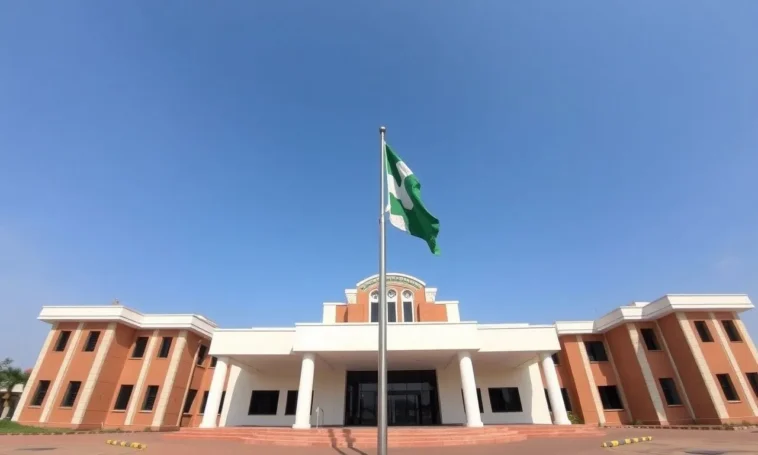
Kwara State 2026 Budget
Kwara Assembly Approves ₦656.5bn 2026 Budget: Inside the ₦10.5bn Hike for Infrastructure
Kwara State 2026 Budget has officially been scaled up to ₦656.5 billion as the House of Assembly injects an additional ₦10.5 billion to accelerate critical infrastructure and social welfare projects. Kwara’s ₦656.5 Billion Blueprint: A State Preparing for an Economic SurgeThe political corridors of Ilorin were abuzz this Friday as the Kwara State House of Assembly officially greenlit the 2026 Appropriation Bill. In a move that signals a bold shift toward aggressive physical development, the legislature approved a staggering ₦656,595,559,298.49—a significant ₦10.5 billion leap from the initial estimates tabled by Governor AbdulRahman AbdulRazaq just months ago. This isn’t just a collection of numbers; it is a declaration of intent for a state that has spent the last year grappling with both rising inflation and the urgent need for modernized infrastructure.
Table of Contents
Presided over by the Speaker, Rt. Hon. Yakubu Danladi-Salihu, the plenary session moved with a sense of urgency. The “Budget of Consolidation and Sustained Growth” was refined through weeks of intense scrutiny by the House Committee on Finance and Appropriation. The legislature argued that the upward revision was not a sign of fiscal recklessness but a necessary adjustment to meet the “real-world” costs of cement, bitumen, and technology in an ever-shifting national economy. For Kwarans, the message is clear: the state is doubling down on its bet that better roads and more secure borders will unlock private sector wealth.
As the Speaker directed the Clerk, Ahmed Kareem, to transmit the “clean copy” to the Governor for assent, the air of anticipation was palpable. This budget is more than a fiscal roadmap; it is a ₦656.5 billion promise to transform Kwara from a civil service state into a regional hub for the creative and tech industries. However, as with all massive financial undertakings, the true test will not be in the passage of the bill, but in the gritty, day-to-day execution of its ambitious capital projects.
Cracking the ₦10.5 Billion Code: Why the Assembly Scaled UpThe most debated aspect of the new budget is undoubtedly the ₦10.5 billion “top-up” added by the lawmakers. While some critics initially viewed this as potential legislative padding, the House Committee on Finance and Appropriation, chaired by Hon. Arinola Lawal, presented a different narrative. The committee’s report highlighted that the initial executive proposal of ₦646 billion had slightly underestimated the inflationary pressures affecting procurement in the construction and healthcare sectors. The Assembly chose to face these economic headwinds head-on, adjusting the recurrent revenue projections upward to fund this critical gap.
By raising the ceiling, the Assembly has effectively “re-armored” the budget, ensuring that ongoing projects aren’t stalled by mid-year funding shortages. This strategic hike is primarily funneled into the Capital Development Fund, which saw its share jump from ₦254 billion to a robust ₦271 billion. It is a gamble on growth—one that assumes that the state’s internal revenue generation will keep pace with its expanding ambitions. The lawmakers were insistent that every kobo of this increase was tied to a specific, measurable outcome in the state’s 16 local government areas.
Below is a snapshot of how the final approved figures compare to the Governor’s original December proposal:
| Budget Component | Original Executive Proposal (₦) | Approved Assembly Budget (₦) | The “Impact” Difference (₦) |
|---|---|---|---|
| Total Budget Size | 646,004,816,893 | 656,595,559,298 | +10.59 Billion |
| Recurrent Expenditure | 219,000,000,000 | 212,600,000,000 | -6.4 Billion (Savings) |
| Capital Expenditure | 254,000,000,000 | 271,000,000,000 | +17 Billion |
| Debt Servicing | ~13.9 Billion | 14.2 Billion | +300 Million |
With ₦271 billion now earmarked for capital projects, Kwara is embarking on its most ambitious infrastructure drive in a decade. This isn’t just about patching potholes; it’s about “Legacy Projects.” From the long-awaited Kwara Hotel reconstruction and the International Conference Centre to the completion of the Innovation Hub, the government is looking to build assets that generate long-term revenue. The ₦17 billion boost to the capital fund means that rural roads, particularly those under the RAAMP (Rural Access and Agricultural Marketing Project), will see accelerated funding to connect farmers to urban markets.
The “shock factor” here lies in the sheer scale of the projects slated for completion in 2026. The administration has completed 38 roads and 29 interlocking access lanes in the past year alone, but the 2026 plan targets an additional 264 kilometers of road across the three senatorial districts. For the average citizen in Baruten or Ekiti local governments, this budget represents the potential end of decades of isolation. The government’s logic is simple: you cannot have a modern economy without modern roads, and you cannot have modern roads without a massive, front-loaded financial commitment.
Visualizing the 2026 Spending Priority (ASCII Art):
Spending Breakdown (Percentage %)CAPITAL EXPENDITURE [####################] 66% RECURRENT SPENDING [########## ] 34%Focus: Completion of Legacy Assets & Rural ConnectivityGuarding the Forest: Security Tech and “Savannah Shield”
Infrastructure is useless if it isn’t safe, and the 2026 budget reflects a sobering reality: Kwara’s rural communities are under threat. A significant portion of the capital spend is tied to “security hardware, vehicles, and technologies.” This is a direct response to the spike in kidnapping and banditry in the forested corridors of Kaiama, Patigi, and Ifelodun. The budget funds the state’s contribution to “Operation Savannah Shield,” a joint military-police initiative aimed at flushing out “bad-faith actors” from the state’s deep forest reserves.
Governor AbdulRazaq has been vocal about using technology—including drones and improved communication networks—to enhance the response time of security agencies. This budget provides the fuel for that technological engine. By investing heavily in security, Kwara aims to protect its agricultural investments, particularly the Alfalfa Estate projects, which are vital for food security and reducing the perennial herder-farmer clashes. It is a “Security-First” economic policy that recognizes that peace is the ultimate prerequisite for prosperity.
The Classroom Revolution: Implementing the New Teachers AllowanceWhile the big machines move dirt on construction sites, a quieter revolution is being funded in Kwara’s classrooms. The 2026 budget officially introduces the Teachers Salary Allowance (TSA). This is a game-changer for the state’s education sector, which has struggled to retain top talent in rural areas. By providing this extra financial cushion, the government is signaling that it values the “software” of development—human capital—as much as the “hardware” of buildings.
Beyond salaries, the budget funds the “Prototype Primary School” project in Adeta and the final delivery of the Kwara State University (KWASU) campuses in Osi and Ilesha Baruba. These tertiary institutions are expected to catalyze the local economies of their host communities, creating jobs for everyone from lecturers to petty traders. The strategy is clear: decentralize education and infrastructure to ensure that the ₦656.5 billion impacts Kwarans far beyond the state capital of Ilorin.
Accountability vs. Speed: The Transparency StandoffDespite the celebratory mood in the Assembly, not everyone is cheering. The Brain Builders Youth Development Initiative (BBYDI) recently “slammed” the state government for its failure to publish the full budget proposal online before its passage. This critique has sparked a heated public conversation about participatory governance. Transparency advocates argue that a ₦656.5 billion document should be available for public scrutiny long before the final vote is cast, ensuring that citizens can track exactly how their taxes are being allocated.
The Speaker defended the process, citing the exhaustive ministerial budget defenses that were open to the media. However, the BBYDI’s “right to know” stance reminds us that fiscal discipline isn’t just about spending less; it’s about spending openly. As the budget moves into the implementation phase, the pressure will be on the executive to provide a digital portal for project tracking. In 2026, the people of Kwara aren’t just looking for new roads; they are looking for “Open Books” to match the “Open Roads.”
Sustaining the Pulse: Managing the ₦14.2 Billion Debt ServiceEvery ambitious plan has a cost, and for Kwara, that cost includes a ₦14.2 billion debt servicing obligation in 2026. While this figure is slightly higher than earlier projections, the government maintains it is well within the sustainable debt-to-GDP ratio. The strategy is to use “borrowed growth”—investing in revenue-generating assets today to pay off the debts of tomorrow. This includes the Kwara Hotel and the Shea Butter factories, which are expected to begin yielding dividends within the next fiscal cycle.
The ₦6.4 billion cut in recurrent expenditure (from the original estimate) is a tactical retreat designed to free up more cash for these repayments. It shows a level of fiscal maturity—slashing the “overhead” of government to ensure the state doesn’t default on its promises to creditors or its citizens. However, critics warn that if IGR (Internally Generated Revenue) targets aren’t met, the state could find itself in a tight spot by Q3 of 2026. It is a high-wire act that requires precise management of every single naira.
The Legacy of AbdulRahman AbdulRazaq: A 2027 Prelude?As Governor AbdulRazaq prepares to sign this document into law, many see it as the “Legacy Budget.” With the 2027 elections looming on the horizon, the pressure to deliver “tangible progress” has never been higher. This budget is designed to be visible—you can see the roads, you can feel the increased security, and teachers can count the extra money in their bank accounts. It is a political masterstroke disguised as a fiscal plan, aimed at cementing the administration’s reputation for transformation.
But the real winners of this budget shouldn’t be the politicians; they should be the traders in Ilorin, the farmers in Patigi, and the tech entrepreneurs in the new Innovation Hub. If the ₦656.5 billion is spent with the integrity the Speaker promises, Kwara could truly become the “strongest service and tech economy in Northern Nigeria.” The stage is set, the funds are cleared, and the clean copy is on its way to the Governor’s desk. Now, it’s time for the people of Kwara to hold the government to its ₦656.5 billion word.
What is your take on the ₦10.5bn hike? Is it a boost for development or a risk for the state’s debt profile? Share your thoughts and join the conversation below!
By David Goldberg (@DGoldbergNews) Business Trends and Economic Policy Correspondent, NewsBurrow NigeriaAs Kwara State navigates this unprecedented ₦656.5 billion fiscal journey, understanding the complex mechanics of regional economics becomes more than just a passing interest—it becomes a necessity for every informed citizen and investor. The shift toward a capital-heavy budget signals a transformative era where infrastructure and policy intersect to redefine the local marketplace. Staying ahead of these shifts requires a deeper grasp of the economic principles that drive Nigerian state development and fiscal sustainability.
To truly appreciate the nuances of the 2026 budget and its long-term impact on your pocket and the community, we have curated a selection of resources that dive into the heart of Nigerian economic strategy and wealth creation. These insights offer the context needed to transition from being a mere observer to a strategic participant in Kwara’s growing economy. Whether you are a business owner or a policy enthusiast, these tools are essential for mastering the financial landscape of the North Central region.
Don’t miss out on the opportunity to sharpen your economic edge; explore our recommended resources below to better position yourself for the opportunities this ₦10.5 billion hike will create. We also invite you to join the conversation by sharing your views in the comments section and subscribing to the Naija NewsBurrow newsletter for exclusive, deep-dive updates on Kwara’s path to prosperity.
Shop Products On Amazon
Shop Products on Ebay








Trending Similar Stories in the News
Assembly Passes Kwara’s N656.5bn 2026 Budget leadership.ng...
Kwara assembly passes ₦656.5bn 2026 budget with ₦10.5bn hike Punch Newspapers...
Trending Videos of Kwara State 2026 Budget
Governor Abdulrazaq Presents 2026 Budget To Kwara Assembly
Similar Popular Articles
#KwaraState #NigeriaNews #Budget2026 #EconomicGrowth #Ilorin
Kwara Budget 2026, AbdulRahman AbdulRazaq news, Kwara Assembly updates, Nigeria State Budgets, Ilorin Economic News
