


National Grid Collapse 2026
2026 National Grid Collapse: Peter Obi Slams Tinubu Gov Over ‘Absurd’ 5,000MW Power Output
National Grid Collapse 2026 has once again plunged millions into darkness, sparking a fierce debate over Nigeria’s leadership and its stagnant 5,000MW power generation capacity.The dawn of 2026 has brought a familiar, chilling darkness to Nigeria. On Friday, January 23rd, at exactly 1:30 PM, the heartbeat of the nation’s industry flatlined. In a catastrophic failure that has now become the “new normal,” the national grid suffered a total system collapse, watching power generation plunge from a modest 4,500MW to a ghostly 24MW in a matter of minutes. For the 240 million citizens of Africa’s most populous nation, it was a moment of profound frustration, signaling that despite trillions in interventions, the ghost in the machine remains very much alive.
Table of Contents
- National Grid Collapse 2026
- 2026 National Grid Collapse: Peter Obi Slams Tinubu Gov Over ‘Absurd’ 5,000MW Power Output
- The Commencement of National Shame: Peter Obi’s Viral Verdict
- The 5,000MW Math: Why 240 Million People Are Powerless
- NISO’s Technical Autopsy: Tripping Lines and Systemic Fatigue
- The Aba Light: A Glimmer of Hope in the Geometric Power Model
- The Economic Price of a 0MW Economy
- The Road to 2027: Will Competence Finally Overcome Darkness?
- Shop Products On Amazon
- Shop Products on Ebay
- Trending Similar Stories in the News
- Trending Videos of National Grid Collapse 2026
- Similar Popular Articles
Our NewsBurrow Network correspondents across the country reported a simultaneous blackout in all major cities, from the bustling streets of Lagos to the political corridors of Abuja. Data obtained by the Naija NewsBurrow Press Team from the Nigerian Independent System Operator (NISO) confirmed that all 23 power generation plants connected to the grid lost output. Load allocation to all 11 electricity distribution companies (DisCos) dropped to zero, effectively cutting the umbilical cord of productivity for households and businesses alike.
The timing of this first collapse of 2026 is particularly stinging. It comes on the heels of a 2025 that saw at least nine recorded grid failures, including a major outage on December 29. While the government speaks of “Renewed Hope,” the reality for the average Nigerian is a reliance on noisy, fume-belching generators that have become the actual “primary” source of power. This latest incident has moved the needle from a technical glitch to a full-blown national crisis of confidence.
The Commencement of National Shame: Peter Obi’s Viral Verdict
As the nation sat in darkness, Peter Obi, the former Labour Party presidential candidate, took to X (formerly Twitter) to deliver a scathing critique that immediately went viral. Under the title “2026: The Collapse Continues,” Obi didn’t mince words, describing the event as the “commencement of national shame.” He noted with grim irony that just as January 2025 began with a grid failure, 2026 has followed suit, suggesting a systemic paralysis that transcends mere technical accidents.
Obi’s argument, which resonates with millions of Nigerians, is that the persistent grid failures are not just engineering flaws but symptoms of a deeper “leadership and governance shortcoming.” He argued that the power sector is the bedrock of any serious economy and requires “competent and committed leadership” to function. His statement has reignited the political fire ahead of the 2027 cycle, positioning the energy crisis as a primary ballot box issue.
The critique also touched on the broken promises of the current administration. Obi reminded Nigerians of campaign pledges to deliver uninterrupted power, contrasting those words with the current reality of zero megawatts. This “shock factor” in his rhetoric has sparked a massive public conversation on social media, with citizens demanding accountability for the billions of naira purportedly funneled into grid stabilization projects over the last decade.
The 5,000MW Math: Why 240 Million People Are Powerless
One of the most jarring points raised in the ongoing debate is the sheer absurdity of Nigeria’s power statistics. Peter Obi highlighted a stark disparity that many find difficult to stomach. Nigeria, with over 240 million people, struggles to maintain a baseline of 5,000MW. To put this in perspective, the NewsBurrow Network has compiled a comparison of generation capacities across the continent, highlighting the “power gap” that keeps Nigeria in the dark.
| Country | Population (Approx.) | Power Generation (MW) | Power Per Capita Rank |
|---|---|---|---|
| South Africa | 64 Million | 40,000+ MW | High |
| Egypt | 115 Million | 40,000+ MW | High |
| Algeria | 48 Million | 50,000+ MW | Very High |
| Nigeria | 240 Million | ~5,000 MW | Bottom Globally |
This “5,000MW Ceiling” has become a symbol of underdevelopment. For three consecutive years, Nigeria has ranked as the country with the least access to electricity globally, leaving nearly 100 million citizens off the grid entirely. The economic cost of this deficit is staggering, with experts estimating that the lack of reliable power strips billions from the national GDP annually. It is a mathematical impossibility to drive an industrial revolution when your total power output is less than that of a single mid-sized European city.
NISO’s Technical Autopsy: Tripping Lines and Systemic Fatigue
While the politicians trade blame, the technical reality on the ground is equally grim. The Nigerian Independent System Operator (NISO) issued a statement attributing the January 23 collapse to the “simultaneous tripping of multiple 330kV transmission lines.” This cascading failure saw the disconnection of major generating units, creating a system-wide disturbance that the fragile infrastructure simply could not absorb.
NISO’s report paints a picture of a grid that is physically exhausted. The frequency performance of the grid—which should oscillate within a tight range of 49.75–50.25Hz—has been consistently unstable, often swinging wildly outside these bounds. These “frequency excursions” are the technical equivalent of a heart arrhythmia; if not controlled, the whole system suffers a cardiac arrest. In this case, the “arrest” was total.
Critics within the Naija NewsBurrow Press Team argue that these “trips” are often foreseeable. They point to aging infrastructure, inadequate “spinning reserves” (backup power that can be activated instantly), and a lack of modern automated grid management systems. Despite the Niger Delta Power Holding Company (NDPHC) recently restoring 450MW at the Geregu plant, the transmission network remains the “weakest link” in the chain, unable to wheel the power that is actually generated.
The Aba Light: A Glimmer of Hope in the Geometric Power Model
However, amidst the national gloom, there was one city that didn’t go dark. As the national grid collapsed, residents of Aba in Abia State continued to enjoy uninterrupted electricity. This was thanks to the Aba Independent Power Project (IPP) operated by Geometric Power. This “ring-fenced” distribution network, which includes its own 188MW gas-fired plant and dedicated gas pipeline, proved that decentralization is not just a theory—it works.
The success of the Aba model has intensified calls for a complete overhaul of the national grid’s centralized structure. Instead of one massive, fragile grid that plunges 200 million people into darkness when a single line in Kogi trips, energy analysts suggest a “regionalized” approach. The Aba IPP serves as a real-world proof of concept that localized generation and distribution can bypass the systemic failures of the national grid.
- Reliability: Aba stayed powered while the rest of Nigeria went dark.
- Independence: The system is decoupled from the national transmission failures.
- Economic Hub: Aba’s manufacturers maintained productivity, avoiding the “generator tax.”
- Scalability: Experts argue this model should be replicated in Lagos, Kano, and Port Harcourt.
The Economic Price of a 0MW Economy
The cost of the National Grid Collapse 2026 isn’t just measured in inconvenience; it’s measured in naira and kobo. For every minute the grid is down, small businesses—from cold rooms to tailors—lose millions. In a “0MW economy,” the cost of production skyrockets as businesses switch to diesel. In 2026, with fuel prices already at historic highs, the “generator tax” is pushing many local manufacturers to the brink of bankruptcy.
Our NewsBurrow Network analysis suggests that the persistent power crisis is the single greatest barrier to Nigeria’s economic resurgence. While the Vice President speaks of Nigeria being back on the “global economic frontline,” the lack of electricity tells a different story. Foreign investors are wary of a nation where the lights can go out at any moment, regardless of how much capital is invested.
The human toll is also significant. Hospitals rely on fragile backup systems for life-saving surgeries, and food security is compromised as refrigeration fails across the supply chain. The “shock factor” here is the realization that for nearly a century of “giant of Africa” status, we have failed to master the basic requirement of modern civilization: reliable energy.
The Road to 2027: Will Competence Finally Overcome Darkness?
As restoration efforts slowly bring cities like Abuja and Lagos back online, the political aftershocks are only beginning. The National Grid Collapse 2026 has become a potent symbol for opposition figures to challenge the “Renewed Hope” agenda. Peter Obi’s call for “competence and empathy” in leadership is a clear signal that the 2027 election will be fought on the battlefield of basic infrastructure.
The Naija NewsBurrow Press Team believes that the government must move beyond “synchronization tests” and “maintenance reports” and embrace the hard truth: the centralized grid is obsolete. The “Aba model” must become the “Nigeria model.” Until the monopoly on transmission is broken and regional clusters are allowed to thrive, the national grid will remain a recurring nightmare for the Nigerian people.
We want to hear from you. How did the latest grid collapse affect your business or home? Is decentralization the only answer, or can the national grid still be saved? Join the conversation in the comments below and share this story to demand a more resilient power future for Nigeria.
Article by: Emily Carter (@ECarterUpdates) Political Analyst and Infrastructure Reporter for NewsBurrow Network
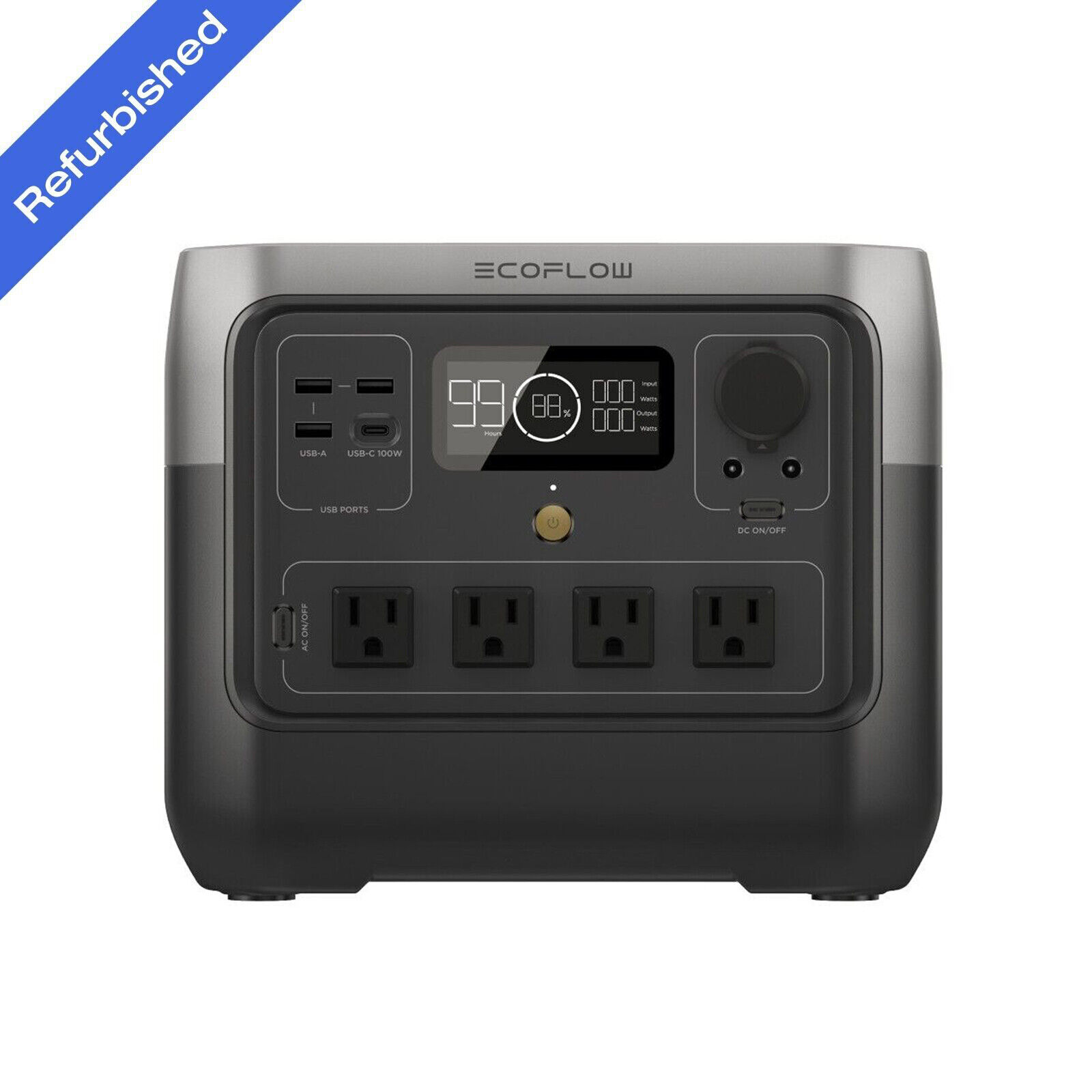
The recurring failure of the national grid has made one thing clear for every Nigerian household and business: waiting for a centralized solution is no longer a viable strategy for survival. As the 2026 power crisis deepens, the transition from being a victim of systemic blackouts to becoming energy independent has become a critical priority. For those who cannot afford the heavy investment of large-scale solar installations or the recurring costs and noise of petrol generators, modern technology has provided a middle ground that is both efficient and silent.
Portable power stations have emerged as the definitive game-changer for maintaining productivity when the grid flatlines. These compact, high-capacity units are designed to keep your essential electronics—from laptops and smartphones to high-speed internet routers and critical medical devices—running seamlessly during a total system collapse. Unlike traditional generators, they offer a fume-free, indoor-friendly alternative that can be recharged via standard wall outlets or even portable solar panels, ensuring you stay connected and powered regardless of the state of the 330kV transmission lines.
Taking control of your own energy security is the most proactive step you can take in these uncertain times. We have curated a selection of the most reliable and high-performing power solutions currently available to help you navigate the “new normal” of 2026. Explore these options today and share your experiences with us in the comments below. Don’t forget to subscribe to the Naija NewsBurrow newsletter for the latest updates on infrastructure developments and expert tips on staying resilient in a changing economic landscape.
Shop Products On Amazon
Shop Products on Ebay




Trending Similar Stories in the News
Blackout as Nigeria’s power grid collapses for first time in 2026 Businessday NG...
Trending Videos of National Grid Collapse 2026
Nigeria’s National Grid Collapses AGAIN | Over 5 Outages in 2025!
Similar Popular Articles
#NigeriaPower #NationalGrid #PeterObi #Tinubu #RenewableEnergyNigeria
Nigeria Power Crisis, Peter Obi, National Grid Collapse, Bola Tinubu, Electricity Generation
