
 David Goldberg
Ogun State 2026 Budget Expansion
Ogun State Unveils Massive ₦1.67 Trillion ‘Legacy’ Budget: What Residents and Businesses Must Know
Ogun State 2026 Budget expansion marks a historic fiscal shift aimed at transforming the Gateway State into Nigeria’s leading industrial hub.By David Goldberg (@DGoldbergNews)
Table of Contents
- Ogun State 2026 Budget Expansion
- Ogun State Unveils Massive ₦1.67 Trillion ‘Legacy’ Budget: What Residents and Businesses Must Know
- The ₦1.668 Trillion Ambition: Deciphering Ogun’s Record-Breaking Fiscal Leap
- Beyond the Billions: Breaking Down the 63% Capital Expenditure Strategy
- The ISEYA Blueprint: How Governor Abiodun Plans to Cement His 8-Year Legacy
- The ₦512 Billion IGR Target: Can Ogun Internalize Its Wealth?
- Gateway to Growth: Major Road and Transport Projects on the 2026 Horizon
- The ‘Pocketbook’ Impact: What the New Budget Means for Local Businesses
- Social Interventions and the Pension Backlog: A Human-Centric Approach
- Industrial Hub Status: Positioning Ogun as Nigeria’s Logistics Powerhouse
- The 2026-2028 MTEF Outlook: Is This Level of Spending Sustainable?
- A New Era for the Gateway State: Final Takeaways for Stakeholders
- Shop Products On Amazon
- Shop Products on Ebay
- Trending Similar Stories in the News
- Trending Videos of Ogun State 2026 Budget Expansion
- Similar Popular Articles
The ₦1.668 Trillion Ambition: Deciphering Ogun’s Record-Breaking Fiscal Leap
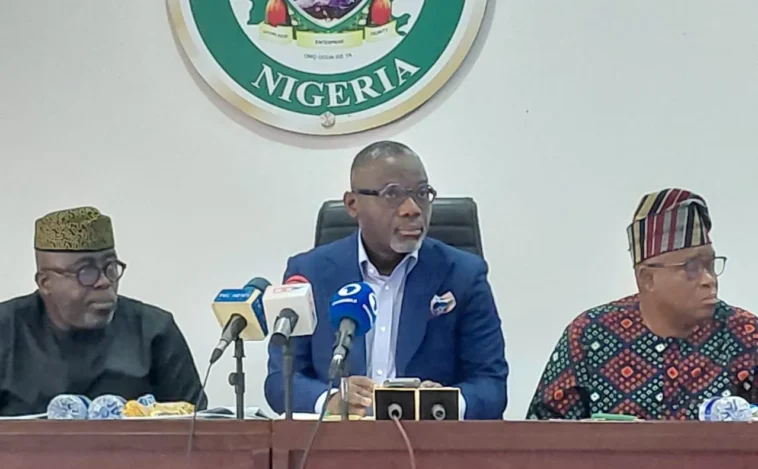
The atmosphere at the Ogun State House of Assembly was electric as Governor Dapo Abiodun stepped onto the podium, wielding a document that could fundamentally redefine the economic trajectory of the “Gateway State.” The proposed 2026 budget, a staggering ₦1.668 trillion, is not just a collection of figures; it is a bold statement of intent. Representing a 58% surge from the previous year, this fiscal plan is the largest in the state’s history, signaling an end to cautious spending and the beginning of an era defined by aggressive growth.
Critics are already whispering about the feasibility of such a jump, but the administration remains undeterred, branding the document as the “Budget of Sustainable Legacy.” It arrives at a time when Nigeria’s sub-national governments are under immense pressure to decouple their fortunes from the volatile federal allocations. For Ogun, this budget is the ultimate stress test of its capacity to function as a sovereign-like economic entity, leveraging its proximity to Lagos and its burgeoning industrial base.
The sheer scale of the expansion has sent shockwaves through the financial corridors of Abeokuta and beyond. By moving from a multi-billion naira mindset to a trillion-naira reality, the government is betting big on its internal reforms. The question on everyone’s lips—from the market woman in Ijebu-Ode to the CEO in Agbara—is simple: where will this money go, and more importantly, where will it come from?
Beyond the Billions: Breaking Down the 63% Capital Expenditure Strategy
In a departure from the typical Nigerian “consumption-heavy” fiscal model, the 2026 budget flips the script. A massive ₦1.044 trillion, or roughly 63% of the total expenditure, has been earmarked for capital projects. This is a deliberate pivot toward brick-and-mortar development, designed to create long-term assets rather than just paying for the day-to-day running of government machinery. It is a high-stakes gamble that prioritizes the future over immediate political gratification.
Recurrent expenditure, which covers salaries and administrative overheads, is pegged at ₦624.76 billion. While this remains a significant sum, the ratio heavily favors construction, equipment, and permanent infrastructure. This lean toward capital spending suggests that the Abiodun administration is racing against time to finish what it started, ensuring that the landscape of Ogun State is physically transformed before the next electoral cycle begins.
To visualize this fiscal distribution, consider the following breakdown of the 2026 Appropriation Bill:
| Budget Category | Amount (₦ Billion) | Percentage (%) |
|---|---|---|
| Capital Expenditure | 1,044.23 | 62.6% |
| Recurrent Expenditure | 624.76 | 37.4% |
| Total Proposed Budget | 1,668.99 | 100% |
The “shock factor” here is the sheer audacity of the capital-to-recurrent ratio. In an era of high inflation, maintaining such a focus requires iron-clad discipline and a refusal to bloated the civil service payroll unnecessarily. If executed as planned, this could become the blueprint for other Nigerian states struggling with overhead-heavy budgets.
The ISEYA Blueprint: How Governor Abiodun Plans to Cement His 8-Year Legacy
The 2026 budget is the financial engine behind the ISEYA agenda—an acronym that has become the North Star of the current administration. Infrastructure, Social Welfare, Education, Youth Empowerment, and Agriculture are not just categories; they are the pillars upon which the “Sustainable Legacy” is being built. This year’s allocation is specifically tailored to act as the “final coat of paint” on a series of developmental masterplans initiated years ago.
Governor Abiodun’s vision appears to be the creation of an integrated ecosystem where industry meets human capital. By pouring resources into the ISEYA pillars, the government aims to ensure that no sector is left behind in the rush toward industrialization. The focus is on completion; the government is less interested in starting new vanity projects and more focused on finishing the highways, hospitals, and housing estates that are currently in various stages of completion.
This legacy-building phase is crucial for the political optics of the administration. For a governor often praised for his technocratic approach, the 2026 budget serves as a tangible legacy that can be seen, touched, and utilized by the masses. It is the bridge between policy papers and the daily reality of the Ogun State citizen, ensuring that the “Gateway State” is not just a passage, but a destination.
The ₦512 Billion IGR Target: Can Ogun Internalize Its Wealth?
Perhaps the most controversial and daring aspect of the 2026 plan is the ₦512 billion Internally Generated Revenue (IGR) target. To put this in perspective, Ogun State is aiming to generate over ₦42 billion every single month from local taxes, levies, and investment returns. This is an aggressive move that signals a desire for total independence from the “feeding bottle” of the Federal Account Allocation Committee (FAAC).
Achieving this will require a surgical approach to taxation. The government has been quick to reassure local businesses that this isn’t about raising tax rates, but about widening the tax net and blocking leakages through digital transformation. However, for the average taxpayer, the fear of “multiple taxation” remains a potent concern. The administration must balance its thirst for revenue with the need to keep the business environment attractive for the very companies it hopes to tax.
Below is a representation of the projected revenue growth trend compared to previous years:
2026 IGR Projection (ASCII Growth Chart)₦512bn |          /
|         /
₦380bn |        /
|       /
₦210bn |  /
| /
|_____________________
2024   2025   2026 (Est)
This projected spike is vertical and ambitious. If Ogun hits this target, it will solidify its position as the second most economically viable state in Nigeria, trailing only Lagos. It would give the state the fiscal muscle to borrow on its own terms and fund its massive infrastructure pipeline without waiting for Abuja.
Gateway to Growth: Major Road and Transport Projects on the 2026 Horizon
Infrastructure remains the crown jewel of the 2026 budget. The government has identified the Ota-Abeokuta corridor as a priority, acknowledging that the state’s industrial potential is currently throttled by poor road networks in key manufacturing hubs. The plan is to complete 2,000 kilometers of road before the current tenure ends, with 1,600 kilometers already reportedly in the bag.
But the real game-changer is the integration of the Lagos Red and Blue Rail lines into Ogun State. This is a masterstroke of regional planning. By allowing the Lagos rail network to spill over into border communities like Agbado and Akute, Ogun is effectively turning itself into a residential and industrial suburb of West Africa’s largest economy. The economic “spillover” from Lagos is no longer accidental; it is being engineered through the 2026 budget.
These transport links are expected to slash commute times and lower the cost of doing business. For the first time, a worker can live in a modern housing estate in Mowe or Ofada and commute to a corporate office in Lagos via rail, all while paying taxes into the Ogun State coffers. It is a win-win scenario that leverages geography to drive fiscal growth.
The ‘Pocketbook’ Impact: What the New Budget Means for Local Businesses
For the thousands of small and medium enterprises (SMEs) that call Ogun home, the 2026 budget is a double-edged sword. On one hand, the massive infrastructure spend promises a “multiplier effect”—more roads mean better access to markets, and more government contracts mean more money flowing into the local economy. On the other hand, the ₦512 billion IGR target has many business owners checking their ledger books with a sense of trepidation.
The government’s focus on “revenue-generating projects” suggests that state agencies will be under immense pressure to collect fees. To counter this anxiety, the budget includes provisions for “social interventions” designed to act as a buffer. However, the true test for businesses will be in the ease of doing business. If the state can simplify its tax processes while providing the promised electricity and roads, the 2026 fiscal year could be the most profitable in a decade.
Key takeaways for the business community include:
- Infrastructure Bounties: Prioritization of roads leading to industrial clusters in Agbara, Sagamu, and Ota.
- Digital Taxation: Expect more automated billing and a move away from manual tax collection to reduce harassment.
- Public-Private Partnerships (PPP): Increased opportunities for private firms to co-fund and manage state assets.
Social Interventions and the Pension Backlog: A Human-Centric Approach
Amidst the talk of trillions and infrastructure, the 2026 budget attempts to address a long-festering wound: the pension backlog. The administration has unveiled a groundbreaking “Additional Pension Benefit” framework. This isn’t just a standard payment; it’s a tiered system providing retirees with one-off payments between 116% and 280% of their final salary to bridge the gap created by old pension schemes.
This “human-centric” move is a calculated attempt to win the hearts of the civil service and retirees, a demographic that wields significant social and political influence. By allocating a chunk of the ₦624.76 billion recurrent expenditure to clearing these arrears, the government is signaling that its “legacy” isn’t just made of concrete, but of social justice for those who served the state.
Furthermore, social welfare programs targeting the most vulnerable are expected to get a boost. In an era of record inflation, these interventions are the difference between survival and destitute for many. The “shock” here is that a government so focused on industrialization is also willing to commit such a large percentage of its “recurrent” budget to social stability—a rarity in modern fiscal planning.
Industrial Hub Status: Positioning Ogun as Nigeria’s Logistics Powerhouse
Ogun is no longer competing with neighboring Nigerian states; it is competing with industrial hubs in Ghana, Vietnam, and Ethiopia. The 2026 budget reflects this global ambition. Resources are being channeled into dry ports and logistics parks that will allow goods to be cleared within the state, bypassing the notorious bottlenecks of the Lagos ports. This is a direct play for the “Blue Economy” and international trade.
By positioning itself as a logistics powerhouse, Ogun is effectively future-proofing its economy. The state recognizes that as Lagos becomes more congested, the smart money will move to where land is available and transport is efficient. The 2026 budget is the invitation letter to global investors, backed by the promise of stable infrastructure and a business-friendly regulatory framework.
To support this, the state is investing in:
- Agro-Cargo Airport Completion: Finalizing the ecosystem around the airport to facilitate export-bound agriculture.
- Special Economic Zones (SEZ): Offering tax incentives and dedicated power to firms operating within specific clusters.
- Digital Infrastructure: Laying the groundwork for fiber optic networks to support the growing “tech-manufacturing” sector.
The 2026-2028 MTEF Outlook: Is This Level of Spending Sustainable?
Is ₦1.67 trillion a sustainable new baseline, or is it a fiscal peak that will lead to a crash? Analysts at NewsBurrow Nigeria have been scrutinizing the Medium-Term Expenditure Framework (MTEF). The data suggests that this isn’t a one-off splurge. The state’s debt-to-revenue ratio remains within manageable limits, provided the ₦512 billion IGR target is met at least by 80%.
The risk, of course, is the “absorption capacity” of the state’s bureaucracy. Can the various Ministries, Departments, and Agencies (MDAs) actually spend ₦1 trillion on capital projects in a single year without massive wastage or corruption? This is where the oversight of the House of Assembly becomes critical. The 2026 budget is a test of Ogun’s institutions as much as its finances. If the state can prove it can handle this volume of capital, it will unlock even greater credit ratings on the international stage.
Ultimately, the “Sustainable Legacy” budget is a high-reward strategy. It bets on the idea that infrastructure creates its own revenue. By building the roads and ports now, the government expects the resulting economic activity to pay off the debts of tomorrow. It is a cycle of growth that requires nerves of steel and impeccable execution.
A New Era for the Gateway State: Final Takeaways for Stakeholders
As we wrap up our analysis of this historic ₦1.67 trillion proposal, one thing is clear: Ogun State is in a hurry. The “Budget of Sustainable Legacy” is a fast-forward button for an economy that has long been the “quiet neighbor” of Lagos. Today, the neighbor is no longer quiet; it is loud, ambitious, and flush with a trillion-naira plan.
For the residents of Ogun, the 2026 fiscal year will be defined by construction dust and, hopefully, the relief of better roads and paid pensions. For businesses, it is a year of opportunity and increased fiscal responsibility. As the House of Assembly begins its final deliberations, the eyes of the nation are on the Gateway State to see if it can turn these massive figures into a reality that changes lives.
What do you think about Ogun’s ₦1.67 trillion budget? Is the ₦512bn IGR target realistic or too much pressure on businesses? Join the conversation in the comments below and share your thoughts with the NewsBurrow Nigeria community!
As the “Budget of Sustainable Legacy” pushes Ogun State into a trillion-naira reality, the stakes for local enterprises have never been higher. With a ₦512 billion IGR target looming, the government’s shift toward digital taxation and automated billing means that manual record-keeping is no longer a viable option for survival. To thrive in this high-pressure fiscal environment, businesses must evolve from basic ledgers to sophisticated systems that ensure every kobo is accounted for and every tax obligation is met with surgical precision.
The transition to Nigeria’s second-largest economy offers a goldmine of opportunities, but only for those equipped with the right tools to manage rapid expansion. Navigating the complexities of this massive 2026 budget surge requires a level of financial clarity that only professional-grade resources can provide. Whether you are managing government contracts or scaling a local startup, staying ahead of the state’s digital transformation is the ultimate competitive advantage in the Gateway State’s new era.
We have curated a selection of top-tier tools specifically designed to help you master your finances, streamline your operations, and remain compliant with the evolving tax landscape. Before you dive into the list, make sure to subscribe to the Naija NewsBurrow newsletter for exclusive economic updates and leave a comment below to tell us how your business is preparing for the 2026 fiscal surge. Explore the premium resources below to position your business at the forefront of Ogun’s industrial revolution.
Shop Products On Amazon
Shop Products on Ebay






Trending Similar Stories in the News
Ogun State Expands 2026 Budget, Clears Pension Backlog Voice of Nigeria...
Abiodun presents N1.668tr 2026 budget to Ogun assembly Punch Newspapers...
Trending Videos of Ogun State 2026 Budget Expansion
Ogun State Government Giant Strides on NTA Abeokuta; Budget Presentation,Tuesday 10th December, 2024
Similar Popular Articles
#OgunState #NigeriaNews #Economy #Budget2026 #Infrastructure
Ogun State News, 2026 Budget, Dapo Abiodun, Nigeria Economy, Infrastructure Development



GIPHY App Key not set. Please check settings