
 Emily Carter
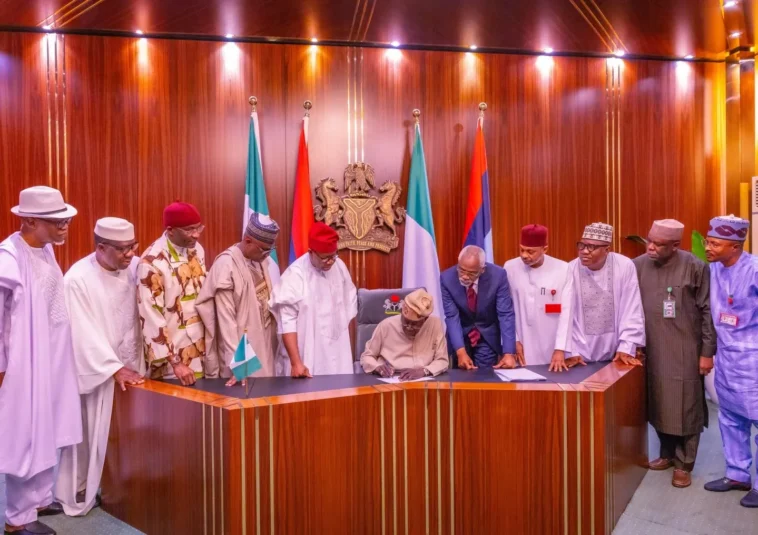
Electoral Act Amendment Bill 2026
Tinubu Signs Electoral Act Amendment Bill 2026: 5 Key Changes Every Nigerian Voter Must Know
Electoral Act Amendment Bill 2026 has officially been signed into law by President Tinubu, marking a pivotal shift in Nigeria’s journey toward the 2027 general elections.By Emily Carter (@ECarterUpdates) | Political Analyst, NewsBurrow Nigeria
Table of Contents
- Electoral Act Amendment Bill 2026
- Tinubu Signs Electoral Act Amendment Bill 2026: 5 Key Changes Every Nigerian Voter Must Know
- The Midnight Pen Stroke: Why the 2026 Amendment Changes Everything
- Six Months of Sunlight: The 180-Day Mandate for INEC
- The Hybrid Paradox: Digital Speed Meets Manual Reality
- Prison Time for Plastic: The War on PVC Trading
- Technological Equity: Bridging the Divide or Creating Shadows?
- The VIP Factor: Why the Ruling Class is Suddenly Pro-Reform
- A Call to Vigilance: The Ball is Now in Your Court
- Shop Products On Amazon
- Shop Products on Ebay
- Trending Similar Stories in the News
- Trending Videos of Electoral Act Amendment Bill 2026
- Similar Popular Articles
The Midnight Pen Stroke: Why the 2026 Amendment Changes Everything
Late into the evening at the Aso Rock Presidential Villa, the air was thick with the weight of history. President Bola Ahmed Tinubu, flanked by the leadership of the National Assembly, leaned over a document that would effectively redefine the rules of engagement for Nigeria’s 2027 general elections. With a single stroke of the pen, the Electoral Act (Amendment) Bill 2026 became law, signaling the end of an era of legal ambiguity and the beginning of a high-stakes digital-manual hybrid era.
This wasn’t just a routine legislative update; it was a surgical strike at the heart of Nigeria’s electoral vulnerabilities. For years, the “Obidient” movement and various civil society groups have clamored for a system that leaves no room for the infamous “incident forms” or the “dark spots” in result transmission. By signing this bill now, a full year before the 2027 cycle kicks into high gear, the Presidency has thrown down a gauntlet to both INEC and the opposition.
The timing is as dramatic as the content. Usually, Nigerian electoral reforms are a desperate, last-minute affair, often caught in the crossfire of pre-election litigation. By assenting to this bill in February 2026, Tinubu has stripped away the excuse of “insufficient time” for implementation. This is a cold, calculated move to stabilize the democratic framework—or, as some critics whisper, a way to cement the current administration’s grip on the process through a “controlled” digital transition.
As the news filtered out of Abuja, the political landscape shuddered. Every Nigerian voter, from the tech-savvy youths in Lagos to the agrarian communities in the North, must now grapple with five seismic shifts that will determine whose thumbprint actually counts when the 2027 dust settles.
Six Months of Sunlight: The 180-Day Mandate for INEC
One of the most profound “shocks” in the new Act is the mandatory 180-day notice for elections. In the past, the Independent National Electoral Commission (INEC) operated under a cloud of logistical franticness, often announcing dates that felt reactive rather than strategic. The 2026 Amendment puts a permanent stop to this by forcing a six-month “Public Notice of Election” window. This isn’t just a win for transparency; it’s a death knell for the “ambush politics” that often characterizes Nigerian primaries.
With 180 days of mandated lead time, political parties no longer have the luxury of internal chaos. This window forces an early solidification of candidate lists and allows voters a prolonged period to scrutinize those seeking their mandates. It effectively professionalizes the election cycle, aligning Nigeria with international best practices where the roadmap is as clear as day long before the first ballot is cast.
However, this new timeline creates a double-edged sword. While it provides stability, it also extends the “campaign season,” potentially draining the coffers of smaller parties while allowing incumbents to utilize state resources for an elongated period. It is a marathon, not a sprint, and the 2026 Act has just made the track significantly longer.
The implications for INEC’s budget are equally massive. The Commission must now demonstrate “readiness” much earlier in the cycle. This prevents the traditional last-minute rush for funding that has, in the past, led to the postponement of elections on the eve of the vote. Below is a breakdown of the new statutory timeline expectations:
| Milestone | 2022 Act Requirement | 2026 Amendment Requirement | Impact |
|---|---|---|---|
| Notice of Election | Variable / Short-term | Mandatory 180 Days | Predictable Cycle |
| Candidate Submission | 90 Days before poll | 120 Days before poll | Better Vetting |
| Result Transmission | Discretionary Electronic | Mandatory Hybrid-Digital | Verifiable Audit Trail |
The Hybrid Paradox: Digital Speed Meets Manual Reality
The most debated aspect of the 2026 Act is the “Hybrid Transmission Model.” During the signing, President Tinubu was candid about Nigeria’s broadband limitations. While the Act mandates the electronic transmission of results from the polling unit to the IReV portal, it preserves the manual paper trail as the legal “gold standard” in the event of a technological collapse. This is the “security blanket” that both comforts and terrifies the Nigerian electorate.
Critics argue that this “hybrid” approach is a loophole that could allow for the manipulation of results during the manual collation phase—the traditional “black box” of Nigerian elections. However, supporters argue that in a country where 4G penetration is still patchy in rural Zamfara or the creeks of the Niger Delta, a purely digital system would disenfranchise millions. It is a pragmatic, if frustrating, compromise for a nation in transition.
The shock factor here lies in the “broadband readiness” clause. The Act empowers INEC to determine, on a polling-unit basis, if the infrastructure supports real-time transmission. This gives INEC immense power. If a polling unit in an opposition stronghold is deemed “low-connectivity,” will the manual delay be used to facilitate “adjustments”? This is the question that will dominate political talk shows until 2027.
To visualize the flow of data under this new hybrid system, consider the following ASCII representation of the result journey:
[POLLING UNIT DATA]
|
|----> (PATH A) ELECTRONIC TRANSMISSION (IReV) --> Public View (Real-time)
|
|----> (PATH B) MANUAL BALLOT BOX --> Ward Collation --> LGA Collation --> State Collation
|
[FINAL DECLARATION] <--- (Legal Audit: Path B must corroborate Path A)
Prison Time for Plastic: The War on PVC Trading
In a move that has sent ripples through the "political structure" of various godfathers, the 2026 Amendment introduces draconian penalties for the buying, selling, or unauthorized possession of Permanent Voter Cards (PVCs). For decades, the "market" for PVCs was an open secret—poor voters would sell their cards for a bag of rice or a few thousand Naira, effectively selling their future before they even reached the booth.
The new law characterizes PVC trading as a felony, punishable by significant prison terms without the option of a fine for repeat offenders. This is a direct assault on the "vote-buying" industry. By criminalizing the possession of cards belonging to others, the Act aims to make the logistics of mass voter suppression too risky for local thugs and party agents to handle.
But here is the twist: will the police actually enforce this? NewsBurrow Nigeria has observed that the enforcement of electoral laws has historically been selective. If the "Big Fish" funding these operations remain untouched while only the "Small Fry" street agents go to jail, the cycle of corruption will simply evolve. The 2026 Act provides the teeth; now we must see if the Nigerian Police Force has the stomach to bite.
We are calling on our readers: Is a prison sentence enough to stop vote-buying in your community, or is the poverty gap too wide for the law to bridge? Join the conversation in the comments below!
Technological Equity: Bridging the Divide or Creating Shadows?
President Tinubu’s emphasis on "technological equity" is perhaps the most sophisticated narrative shift in this bill. The 2026 Act explicitly mentions that technological failures should not lead to the cancellation of elections if a manual audit can be performed. This sounds fair on paper, but in practice, it creates a "two-tier" election experience. Urban voters in Abuja and Lagos will experience a high-speed, digital election, while rural voters may find themselves stuck in a 1990s-style manual slog.
The Act mandates INEC to upgrade its infrastructure, but the funding gap remains a concern. Senator Simon Lalong recently presented a massive 2026 budget estimate to the Senate, much of which is earmarked for "technological hardening." This includes cybersecurity measures to prevent the hacking of the IReV portal—a fear that has grown since the 2023 glitches.
The "shocking" reality is that even with this new law, the 2027 election will be an experiment in cybersecurity. Nigeria is moving toward an "Algorithmic Republic," where the software used by INEC is just as important as the person casting the ballot. The Act provides for independent audits of the INEC software, but the question remains: who audits the auditors?
- Digital Hardening: Mandatory encryption for all transmitted results.
- Audit Access: Accredited party agents now have the right to inspect the backend "metadata" of transmitted results.
- Fallback Protocols: Clear, legally binding steps for when a BVAS machine fails to sync.
The VIP Factor: Why the Ruling Class is Suddenly Pro-Reform
There is a peculiar irony in the APC-led government pushing through such rigorous reforms. Usually, incumbent parties prefer "loose" laws that allow for flexibility. So why did Tinubu sign this so quickly? At NewsBurrow, we believe this is a "Legitimacy Play." By strengthening the process, the administration hopes to neutralize the "mandate thief" narrative that dogged the 2023 transition.
By assenting to the Uwais-style reforms (partially), Tinubu is positioning himself as a "reformer-in-chief" ahead of 2027. It is a brilliant political chess move. If the system is seen as "fairer," then any victory achieved under it becomes harder to challenge in the streets or the courts. However, this strategy only works if the reforms are implemented with absolute impartiality.
The "Obidient" and "Atikulated" camps are already dissecting the fine print. They are looking for the "hidden clauses" that might favor the incumbent. For instance, the clause regarding "cybersecurity threats" allows INEC to suspend electronic transmission in specific zones. In the wrong hands, this could be used to "black out" results from hostile territories under the guise of protecting the system from hackers.
A Call to Vigilance: The Ball is Now in Your Court
The Electoral Act Amendment Bill 2026 is a masterpiece of legislative compromise. It offers the digital future we crave while tethering us to the manual past we can’t yet escape. It promises prison for the corrupt and transparency for the honest. But as we have learned in Nigeria, the law is only as good as the people who execute it.
The 2027 roadmap is now legally paved. We have the 180-day notice, the hybrid transmission, and the criminalization of PVC trading. But the ultimate "Key Change" isn't in the bill—it's in the voter. If Nigerians do not hold INEC accountable to every comma and period in this new Act, the "Midnight Pen Stroke" will have been for nothing.
What do you think of the new 2026 Electoral Act? Does the hybrid model make you feel more secure, or do you smell a rat in the manual fallback? NewsBurrow Nigeria wants to hear your voice. Share this article and tag us with your thoughts!
Stay tuned to Naija NewsBurrow for our upcoming "Deep Dive" series where we interview constitutional lawyers and IT experts on the hidden vulnerabilities of the 2026 Amendment.
As Nigeria stands on the precipice of this legislative evolution, understanding the gravity of these reforms requires more than just a glance at the headlines. The journey of our democracy is a complex narrative, woven together by decades of struggle, triumph, and the persistent quest for a transparent electoral process. To truly grasp why the 2026 Amendment is a watershed moment, one must look back at the historical milestones that have shaped the Nigerian ballot box into what it is today.
For the informed voter and the political enthusiast, delving into the documented history of our nation's governance offers an invaluable perspective on the road to 2027. Knowledge is the ultimate tool for accountability, and equipping yourself with the context of past electoral battles empowers you to better navigate the changes ahead. We have curated a selection of essential resources that bring these historical struggles to life, providing a deeper look into the soul of Nigerian politics.
We invite you to explore these insightful collections and join the growing community of citizens committed to a well-informed democracy. Be sure to share your thoughts in the comments section below and subscribe to the Naija NewsBurrow newsletter for exclusive updates and deep-dive analyses delivered straight to your inbox. Take the next step in your civic journey by exploring these highly recommended titles today.
Shop Products On Amazon
Shop Products on Ebay



Trending Similar Stories in the News
Electoral Amendment Act 2026: President Bola Tinubu sign Electoral bill 2026 into law ahead of 2027 elections BBC...
Nigeria's Electoral Law Signed, Transparency Questions Linger allAfrica.com...
Trending Videos of Electoral Act Amendment Bill 2026
2026 Electoral Act: Analysis on implication for Nigeria elections | Daybreak
Similar Popular Articles
#NigeriaElections #Tinubu #ElectoralReform #NaijaNews #Democracy
Electoral Act 2026, Nigeria Election Reform, President Tinubu, INEC 2027 Roadmap, Nigeria Politics



GIPHY App Key not set. Please check settings