
 David Goldberg
Cbn Cuts Mpr Interest Rate
Relief for Borrowers: CBN Trims Interest Rate to 26.5% as Inflation Eases
CBN cuts MPR interest rate to 26.5%, signaling a major relief phase for Nigerian businesses and homeowners seeking more affordable credit.Relief for Borrowers: CBN Trims Interest Rate to 26.5% as Inflation Eases
By David Goldberg (@DGoldbergNews)
Table of Contents
- Cbn Cuts Mpr Interest Rate
- Relief for Borrowers: CBN Trims Interest Rate to 26.5% as Inflation Eases
- The Great Deceleration: Why Cardoso Finally Pulled the Lever
- The Arithmetic of Affordability: Impact on Your Monthly Payments
- A Lifeline for SMEs: Can Small Businesses Finally Breathe?
- The Mortgage Market: Is the Dream of Homeownership Reigniting?
- The Billion Fortress: How Reserves Are Shielding the Naira
- Corporate Resilience: The Nestlé Nigeria Turnaround
- The Silent Risks: Election Spending and Fiscal Discipline
- A Global Perspective: The High-Yield Play
- The NewsBurrow Verdict: A Bold Step, but the Journey is Long
- Shop Products On Amazon
- Shop Products on Ebay
- Trending Similar Stories in the News
- Trending Videos of Cbn Cuts Mpr Interest Rate
- Similar Popular Articles
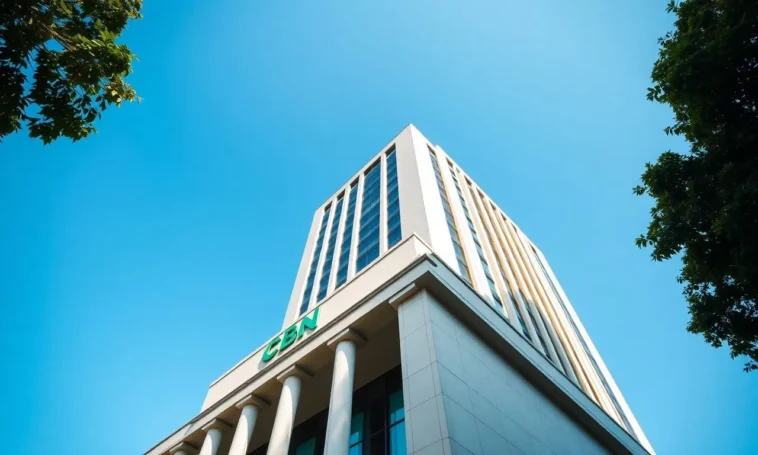
The air inside the Central Bank of Nigeria’s headquarters in Abuja felt different this Tuesday. For over a year, the building has been the command center for a scorched-earth policy against runaway prices, with Governor Olayemi Cardoso leading a relentless charge of interest rate hikes. But today, the hawk has finally tucked its wings. In a move that sent immediate ripples through the Nigerian Stock Exchange and brought a sigh of relief to debt-burdened boardrooms, the Monetary Policy Committee (MPC) announced a 50-basis point cut, bringing the Monetary Policy Rate (MPR) down to 26.5%.
This isn’t just a numerical adjustment; it is a psychological pivot. For the first time in 2026, the apex bank is signaling that the “stabilization phase” is no longer a distant goal but a present reality. As the news broke, analysts scrambled to recalibrate their projections. The message from the glass house is clear: the fever of hyper-inflation is breaking, and the patient—Nigeria’s economy—is finally ready for a lighter dose of medicine.
At NewsBurrow Nigeria, we’ve tracked this trajectory closely. While the 27% peak of late 2025 felt like a chokehold on productivity, this move to 26.5% represents the first crack in the wall of high borrowing costs. It is a calculated gamble on a 10-month disinflationary trend that has seen headline figures finally begin to behave. But beneath the surface of this “relief,” a complex game of chess is being played between the CBN, commercial lenders, and a skeptical public.
The Great Deceleration: Why Cardoso Finally Pulled the Lever
The justification for this cut lies in the cold, hard data provided by the National Bureau of Statistics (NBS). For ten consecutive months, the heat has been leaving the kitchen. Inflation, once a roaring fire threatening to consume the middle class, eased to 15.10% in January 2026. This downward slope provided the “monetary space” Cardoso needed to appease a manufacturing sector that has been shouting itself hoarse over the cost of capital.
However, the MPC’s decision wasn’t unanimous without caution. The committee pointed to improved food supply chains and a surprisingly resilient Naira as the twin engines of this disinflation. By easing the MPR, the CBN is betting that the current price stability is structural rather than accidental. It is a bold statement of confidence in the face of global economic volatility.
Yet, one must ask: is 50 basis points enough? To a corporate treasurer managing billions in credit lines, it’s a welcomed gesture. To a small shop owner in Alaba Market, it remains a distant academic exercise until their local bank manager actually drops the interest on their overdraft. The “stabilization phase” is now officially in session, but the transition from policy to the street is where the real battle will be won.
The Arithmetic of Affordability: Impact on Your Monthly Payments
How does this move translate to your bank statement? In the world of Nigerian finance, the MPR serves as the North Star for all other lending rates. When the central bank moves, the commercial banks are expected to follow, albeit often with a frustrating lag. A 50-basis point drop should, in theory, trigger a corresponding slide in prime lending rates, making that equipment loan or personal credit line slightly less predatory.
For the average borrower, the impact is incremental but significant. On a N10 million business loan, a 0.5% reduction in interest translates to N50,000 in annual savings. While that won’t buy a new warehouse, in an economy where every kobo is being squeezed by high operational costs, it represents one more month of electricity or a small bonus for a dedicated staff member.
Below is a representation of the policy shift over the last six months:
| Month/Year | MPR Status | Rate (%) | Policy Stance |
|---|---|---|---|
| September 2025 | Decrease | 27.0% | Initial Easing |
| November 2025 | Hold | 27.0% | Watchful Waiting |
| February 2026 | Decrease | 26.5% | Stabilization Phase |
A Lifeline for SMEs: Can Small Businesses Finally Breathe?
Small and Medium Enterprises (SMEs) are the undisputed backbone of the Nigerian economy, yet they have been the primary victims of the “aggressive tightening” era. High interest rates didn’t just make expansion difficult; they made survival an Olympic sport. With the MPR at 26.5%, the CBN is effectively throwing a life jacket to businesses that were previously drowning in debt servicing costs.
At NewsBurrow, we’ve spoken to entrepreneurs who had put expansion plans on ice. The narrative is shifting from “how do we stay afloat?” to “can we afford to hire again?” Lower borrowing costs encourage SMEs to take on productive debt—investing in new machinery, diversifying product lines, or moving into digital spaces. It is the catalyst needed to flip the script from stagnation to growth.
However, there is a “shock factor” here that many are ignoring. While the CBN has lowered the rate, it has kept the Cash Reserve Ratio (CRR) for commercial banks at a staggering 45%. This means that while money is “cheaper,” it remains scarce. Banks still have a significant portion of their deposits locked away at the central bank, which could lead to a scenario where rates are lower, but banks remain extremely stingy with who they actually lend to.
The Mortgage Market: Is the Dream of Homeownership Reigniting?
For the Nigerian middle class, the dream of owning a home has felt like a cruel joke in recent years. With mortgage rates often hovering in the high 30s, the barrier to entry was insurmountable for anyone without a massive cash pile. This trim in the MPR is the first real signal to the mortgage sector that the tide might be turning.
A reduction in the benchmark rate directly influences the cost of long-term funds. If the CBN sustains this trajectory, we could see a resurgence in retail mortgage products. Real estate developers, who also rely heavily on construction finance, may find it easier to complete projects that have been stalled by high financing costs, potentially increasing the supply of affordable housing.
Consider this ASCII representation of the projected decline in borrowing costs if the trend continues:
Interest Rate Trend (Projected)
Rate %
|
30|   *
28|       *
26|           * (Current: 26.5%)
24|               .
22|                   .
+---------------------------
2025 (Q3)  2026 (Q1)  2026 (Q4)
The $50 Billion Fortress: How Reserves Are Shielding the Naira
You cannot talk about interest rates in Nigeria without looking at the war chest. Nigeria’s foreign reserves have surged to a 13-year high of $50.45 billion. This is the “secret sauce” that allowed the MPC to be so bold. For years, the CBN had to keep rates high specifically to attract “Hot Money”—foreign investors who bring in dollars just to chase high interest rates.
With $50 billion in the bank, the CBN no longer feels the desperate need to “bribe” foreign capital with astronomical rates. This massive buffer provides nearly 10 months of import cover, giving the Naira a backbone it hasn’t had in over a decade. It allows the MPC to focus on internal growth rather than just external defense. It is a position of strength that we haven’t seen since the early 2010s.
This reserve growth is largely attributed to disciplined oil revenue management and a crackdown on illegal FX leakages. For the first time in a generation, the CBN is acting from a proactive stance rather than a reactive one. The reserves are the fortress, and the rate cut is the first sortie out of the gates to reclaim economic territory.
Corporate Resilience: The Nestlé Nigeria Turnaround
The impact of this stabilization is already visible in the corner offices of Lagos. Nestlé Nigeria recently announced a staggering pretax profit of N166.8 billion for 2025, a massive reversal from the losses incurred during the peak of the FX crisis in 2024. This isn’t just luck; it’s the result of a more predictable monetary environment.
When the exchange rate stabilizes and the interest rate outlook becomes clear, large corporations can plan. They can hedge their risks and invest in local supply chains. The Nestlé story is a template for what we expect to see across the FMCG and manufacturing sectors in 2026. As borrowing costs ease further, these giants will have more liquidity to pump back into the local economy.
The “shock” here for the public is that while companies are returning to profit, prices on the shelves haven’t necessarily dropped. There is a lag between corporate recovery and consumer relief. We are watching to see if these companies will pass their savings on to the Nigerian consumer or simply use them to repair their battered balance sheets.
The Silent Risks: Election Spending and Fiscal Discipline
Despite the optimism, a shadow looms on the horizon. The MPC communiqué contained a subtle but stern warning about “election-related fiscal releases.” As Nigeria moves closer to its next political cycle, the tendency for the government to pump liquidity into the system increases. If the fiscal side of the government spends recklessly, it could undo all the hard work the CBN has done to tame inflation.
There is an inherent tension between the CBN’s monetary discipline and the political class’s need for populist spending. If billions are released into the economy for political campaigning, we could see a sudden spike in liquidity that forces the CBN to raise rates again by mid-year. This is the “Sword of Damocles” hanging over the 26.5% rate.
We must demand synchronization between the Ministry of Finance and the Central Bank. One cannot be pressing the brake while the other is stomping on the accelerator. The success of this rate cut depends entirely on the government’s ability to keep its spending in check during the upcoming months of political maneuvering.
A Global Perspective: The High-Yield Play
Even at 26.5%, Nigeria remains one of the highest-yielding markets in the world. Compared to regional peers, Nigeria is still playing a high-stakes game. This ensures that while we are cutting rates to help locals, we aren’t scaring off all the foreign investment that helps keep our FX market liquid.
- Nigeria: 26.5% (The High-Yield Giant)
- Egypt: 27.25% (A Close Rival for Capital)
- South Africa: 8.25% (A Low-Yield Mature Market)
- Kenya: 13.0% (The Mid-Tier Player)
This ranking shows that Nigeria is still a “darling” for carry-trade investors. The trick for Cardoso is to lower this rate just enough to stimulate the Lagos and Kano markets without making the Naira lose its luster for the London and New York investors. It is a delicate balancing act on a very thin wire.
The NewsBurrow Verdict: A Bold Step, but the Journey is Long
As we wrap up this analysis, it is clear that the 50-basis point cut is a victory for the “Stabilization Phase.” It is a move that acknowledges the pain of the Nigerian people while maintaining the guardrails of economic sanity. We at NewsBurrow see this as the beginning of a new chapter—one where growth is no longer a casualty of the war on inflation.
However, the real test lies ahead. Will your bank call you tomorrow to offer a lower rate on your business loan? Probably not. It will take pressure from the public and sustained policy consistency from the CBN to make this “relief” felt in the markets of Onitsha, the farms of Benue, and the tech hubs of Yaba. The pivot has happened, but the direction of travel must be defended at all costs.
What do you think? Is 26.5% the “sweet spot” for our economy, or is it still too high to trigger real growth? Are you seeing any changes in your bank’s attitude toward loans? Join the conversation in the comments below and share your thoughts with the NewsBurrow community!
As the Central Bank of Nigeria pivots toward this new stabilization phase, the burden of high-interest debt is finally beginning to lift, opening a strategic window for savvy entrepreneurs to reinvest in their operational foundations. With the MPR now at 26.5%, the focus shifts from mere survival to scaling efficiency, making it the perfect time for Nigerian businesses to modernize their financial tracking and tax compliance systems. Transitioning to professional-grade tools ensures that your enterprise is audit-ready and capable of maximizing the newly available credit lines that this rate cut promises to unlock.
To fully capitalize on these easing monetary conditions, integrating robust systems that provide real-time visibility into your cash flow is no longer a luxury—it is a competitive necessity. Leveraging top-tier resources can help you navigate the complexities of the current economy while ensuring every kobo saved from reduced borrowing costs is put to its most productive use. We invite you to explore the curated selection of industry-leading solutions below, specifically chosen to empower your business during this economic shift.
Don’t miss out on the latest insights and exclusive updates as the Nigerian economy continues to evolve; join the conversation in the comments and subscribe to the Naija NewsBurrow newsletter for expert analysis delivered straight to your inbox. Take the next step in securing your financial future by discovering the tools that will drive your success in 2026 and beyond.
Shop Products On Amazon
Shop Products on Ebay






Trending Similar Stories in the News
CBN Interest Rate Cut Draws Cautious Praise From Private Sector Arise News...
CBN cuts interest rate again to 26.5% MSN...
Trending Videos of Cbn Cuts Mpr Interest Rate
CBN Reduces Interest Rate To 26.50%
Similar Popular Articles
#NigeriaEconomy #CBN #BusinessNews #InterestRates #FinancialRelief
Nigeria economy news, CBN interest rate, MPR reduction 2026, Nigerian business loans


GIPHY App Key not set. Please check settings