
 BurrowBoss
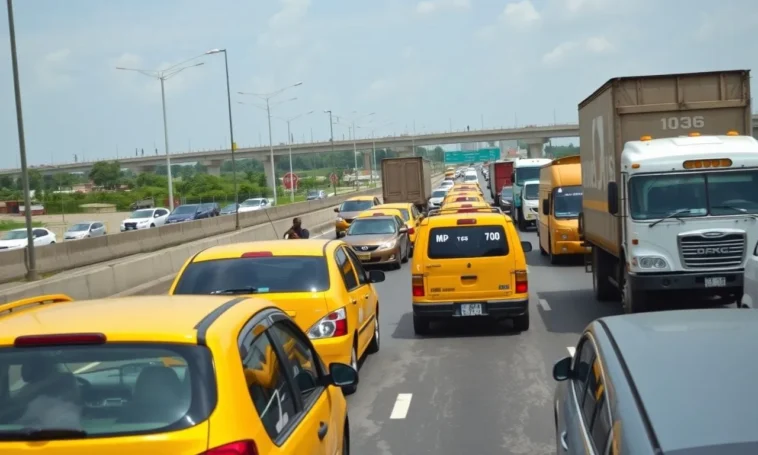
Lagos-ibadan Expressway Partial Closure
Lagos-Ibadan Expressway Closure: Essential Survival Guide and Faster Alternative Routes
Lagos-Ibadan Expressway partial closure is set to trigger significant travel delays for commuters as the Federal Government commences essential structural repairs on key bridges.By Aiden Hughes (@AidenReports)
Table of Contents
- Lagos-ibadan Expressway Partial Closure
- Lagos-Ibadan Expressway Closure: Essential Survival Guide and Faster Alternative Routes
- The Great Kara Lockdown: Why Your Commute Just Became a Six-Week Battle
- Decoding the Phased Chaos: A Timeline of the Repair Stages
- Mastering the 5:00 AM Sprint: Your Survival Toolkit for the Rush
- The Ikorodu-Sagamu Secret: Navigating the Ultimate Bypass
- Magboro’s Hidden Veins: Using Local Shortcuts with Caution
- The Hidden Tax: How Idling Traffic is Draining Your Wallet
- Steel and Safety: Navigating the FRSC’s Multi-Agency Net
- The Ripple Effect: Will This Fix Last, or is it a Band-Aid?
- Shop Products On Amazon
- Shop Products on Ebay
- Trending Similar Stories in the News
- Trending Videos of Lagos-ibadan Expressway Partial Closure
- Similar Popular Articles
The Great Kara Lockdown: Why Your Commute Just Became a Six-Week Battle
The dawn of February 2026 brought a chilling announcement for the millions who rely on the Lagos-Ibadan Expressway. The Federal Government has officially greenlit a massive, six-week partial closure to save the integrity of Nigeria’s busiest economic artery. It is a necessary evil, a surgical strike on the crumbling expansion joints of the Kara, Magboro, and Arepo bridges that have long groaned under the weight of thousands of heavy-duty trucks.
For the average Lagosian, this isn’t just “roadwork.” It is a test of mental fortitude. The Federal Ministry of Works, under the directive of David Umahi, has made it clear: the structural integrity of these bridges is at a breaking point. Ignoring the wear and tear could lead to a catastrophic failure that would sever the link between the nation’s largest port city and its northern hinterlands.
The “shock factor” here isn’t just the closure itself, but the timing. Coming at a peak period of economic recovery, the gridlock threatens to spike the cost of everything from tomatoes to tech gadgets. As the contractors from CBC Construction Company move their heavy gear into place, the air around the Kara cattle market is thick—not just with dust, but with the palpable anxiety of drivers who know that a “partial closure” in Lagos often translates to a total standstill.
Decoding the Phased Chaos: A Timeline of the Repair Stages
The repair strategy is being sold as a “phased approach,” but for those trapped in the heat, it will feel like a marathon. The mobilization, which shifted into high gear this week, marks the beginning of a sequence designed to tackle half an expansion joint at a time. Each bridge is slated for a week-long intensive focus, moving systematically from the Lagos-bound lanes to the Ibadan-bound sections.
Authorities have promised that by tackling the work in stages, traffic will never be completely severed. However, the reality of “lane narrowing” on a road that already struggles with 24-hour volume is daunting. The plan involves a carefully choreographed dance of concrete and steel, where one side of the expressway effectively becomes a two-way street during peak operations.
To visualize the disruption, consider the projected intensity of the work phases over the next month and a half:
| Phase Period | Target Bridge | Expected Traffic Impact |
|---|---|---|
| Week 1 – 2 | Kara Bridge (Lagos-Bound) | Extreme: High volume of morning commuters affected. |
| Week 3 – 4 | Magboro & Arepo Bridges | Severe: Bottlenecks at residential hubs. |
| Week 5 – 6 | Ibadan-Bound (Final Joints) | Moderate: Afternoon outbound rush delays. |
Mastering the 5:00 AM Sprint: Your Survival Toolkit for the Rush
If you are planning to leave your house by 7:00 AM, you have already lost the battle. The “peak hour” has shifted. To survive the Lagos-Ibadan Expressway partial closure, commuters are now adopting the “5:00 AM Rule.” This isn’t just about beating the traffic; it’s about ensuring your vehicle doesn’t become a stationary oven in the middle of a four-mile crawl.
Vehicle maintenance has never been more critical. A single overheating radiator at the Kara bridge ascent can trigger a ten-kilometer tailback. Before you head out, check your cooling system, tire pressure, and ensure you have at least half a tank of fuel. Idling for three hours in a 34°C heatwave consumes more gas than you might expect, and running out of fuel in the “yellow zone” is a recipe for a LASTMA-induced nightmare.
Beyond the mechanics, mental health is the secret weapon. Download your podcasts, stock up on bottled water, and perhaps most importantly, manage your expectations. The frustration of seeing the bridge but being unable to cross it for ninety minutes is a specific type of Lagosian torture that requires a calm mind and a very patient playlist.
The Ikorodu-Sagamu Secret: Navigating the Ultimate Bypass
When the Kara bridge turns into a parking lot, the savvy traveler looks toward the Ikorodu-Sagamu Road. This route is no longer just a “back way”; it is the primary artery for those who value their time over their suspension. While the road has its own character—and its own patches of rough terrain—it offers a continuous flow that the main expressway currently lacks.
Driving through the lush greenery of the outskirts, you bypass the entire Kara-Magboro-Arepo bottleneck. For those coming from the Island or Lekki, taking the water via ferry to Ikorodu and then jumping on a bus to Sagamu is becoming an increasingly popular “multi-modal” hack. It’s a bit more expensive, but the trade-off in stress reduction is immeasurable.
However, be warned: as more people discover this route, the Sagamu-Ikorodu axis is seeing its own surge in volume. The “butterfly effect” of the Lagos-Ibadan closure means that even these secondary roads are feeling the heat. It is a game of strategic navigation where checking Google Maps every fifteen minutes is mandatory.
Magboro’s Hidden Veins: Using Local Shortcuts with Caution
For the residents of the “border towns”—Magboro, Arepo, and Berger—the closure is a domestic crisis. Local residents have begun using internal community link roads to bypass the main expansion joint work. These “hidden veins” can shave thirty minutes off a trip, but they are not for the faint of heart or low-clearance vehicles.
These local bypasses are often unpaved and narrow, intended for community movement rather than thousands of diverted cars. If you choose to explore these routes, do so with respect for the local communities. The influx of heavy traffic into quiet residential streets has already sparked conversations about dust pollution and safety for children in these neighborhoods.
Using these shortcuts effectively requires an “insider’s eye.” Many are only accessible during dry weather, as a single downpour can turn a shortcut into a muddy trap. If you see the local boys waving you away from a particular street, listen to them—they know which roads have been swallowed by the latest construction debris.
The Hidden Tax: How Idling Traffic is Draining Your Wallet
There is a silent economic predator lurking in the gridlock: the cost of idling. When a car sits in traffic for hours, the fuel efficiency drops to zero, but the consumption remains constant. For logistics companies moving goods from the Lagos ports to the North, this six-week closure is effectively an unannounced tax on operations.
The math is brutal. An extra two hours in traffic daily can result in an additional 15-20% hike in weekly fuel expenditure for a standard sedan. For heavy-duty trucks, the numbers are even more staggering. We are looking at a potential spike in “last-mile” delivery costs, which will inevitably be passed down to the consumer at the local market.
Traffic Impact Visualization (Projected)
Commute Time (Hours)
|
|          * (Work Zone)
|         ***
|        *****
|       *******
|  * ********* *
|*********************
+-----------------------
Pre-Repair   Repair Peak   Post-Repair
Steel and Safety: Navigating the FRSC’s Multi-Agency Net
The Federal Road Safety Corps (FRSC), alongside LASTMA and the police, have deployed a massive “safety net” across the construction zone. The presence of these officers is both a blessing and a deterrent. Their job is to keep the “one-way” enthusiasts in check—a group that traditionally flourishes during Lagos traffic delays.
Night driving during this period is particularly hazardous. While the contractors have promised lighting and warning signs, the “ghost” barriers and sudden lane shifts can be deadly for an unsuspecting driver. The FRSC has issued a stern advisory: if you don’t need to be on the Kara-Longbridge stretch after 10:00 PM, stay away. The combination of heavy machinery and exhausted drivers is a volatile mix.
Compliance is not just about avoiding fines; it’s about survival. The barriers installed by CBC Construction are solid concrete. Hitting one at even moderate speed is a total loss. Follow the yellow vests, watch for the reflective cones, and for the love of Nigeria, do not attempt to “drive against traffic” (Awo-wo) regardless of how stationary the road looks.
The Ripple Effect: Will This Fix Last, or is it a Band-Aid?
As we endure these six weeks of hardship, the question on every Nigerian’s lips is: “Will this actually last?” We have seen “urgent repairs” before that faded into potholes within a year. However, the focus on expansion joints—the very skeleton of the bridge—suggests a more fundamental fix than a simple asphalt overlay.
At NewsBurrow Nigeria, we’re keeping a close eye on the quality of materials being used. The Minister of Works has staked his reputation on “concrete technology” and long-term durability. If these bridges are truly reinforced to handle the 2026-2030 projected load, the current suffering might just be worth the price. But if the joints start rattling again by Christmas, the public conversation will turn from frustration to outrage.
This closure is a reminder of how fragile our infrastructure remains. It’s a call to action for more investment in rail and water transport to de-congest this single, overworked road. Until then, we are all in this together—stuck in the heat, watching the Kara bridge, and praying for a clear path home.
What is your survival strategy for the Kara bridge closure? Are you sticking to the expressway or taking the Ikorodu gamble? Join the conversation in the comments below and share your real-time traffic updates with the NewsBurrow community!
As the “Great Kara Lockdown” transforms your daily commute into a battle of nerves, the risks on the road extend far beyond simple delays. In the high-stakes environment of lane narrowing and aggressive diversions, fender-benders and “ghost” accidents become an unfortunate reality for many. Protecting yourself legally and financially during this six-week repair phase requires more than just patience; it requires an indisputable witness to every kilometer of your journey.
For the modern Lagosian navigating these construction zones, having a digital eye on the road is no longer a luxury but a vital security asset. Whether it is documenting an unexpected encounter with a reckless driver or providing proof during a minor scrape at a bottleneck, the right tech can save you from a world of insurance stress. We have curated a selection of top-tier safety tools that ensure you are never left defenseless in a “his-word-against-mine” situation while caught in the gridlock.
How are you keeping your vehicle safe during these turbulent roadworks? We invite you to share your experiences and safety hacks in the comments below, and don’t forget to subscribe to the Naija NewsBurrow newsletter for real-time traffic alerts and exclusive commuter guides. Explore our recommended safety essentials below to stay one step ahead of the Lagos-Ibadan congestion.
Shop Products On Amazon
Shop Products on Ebay




Trending Similar Stories in the News
FG announces six-week partial closure of Lagos–Ibadan Expressway for bridge repairs Vanguard News...
FG announces six-week partial closure of Lagos-Ibadan Expressway for repairs The Guardian Nigeria News...
Trending Videos of Lagos-ibadan Expressway Partial Closure
Repair Works On Lagos–Ibadan Expressway To Last Two Months, Says FRSC
Similar Popular Articles
#LagosTraffic #NigeriaInfrastructure #RoadSafety #CommuterLife #LagosIbadan
Lagos Traffic, Road Repairs, Nigeria Infrastructure, Travel Advisory



GIPHY App Key not set. Please check settings