
 Fatima Al-Hassan
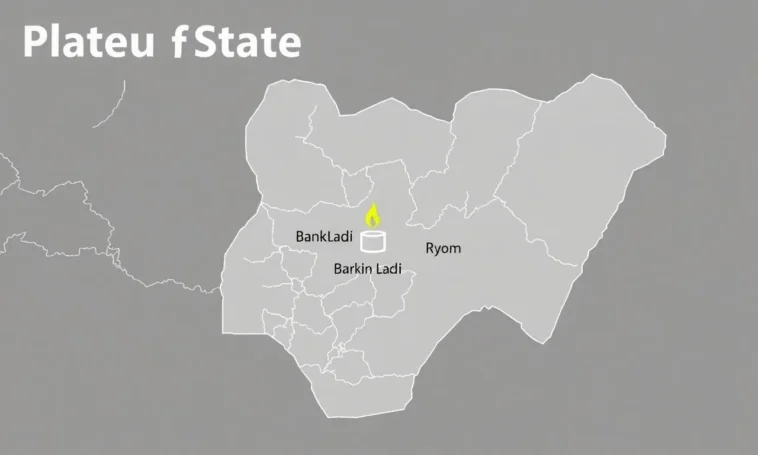
Plateau Mass Burial Terror Attack
Tears in Plateau: Mass Burial Held for 9 Victims of Barkin Ladi Terror Attack
Plateau mass burial terror attack victims were laid to rest in an emotional ceremony in Barkin Ladi as the community calls for urgent government intervention.By Fatima Al-Hassan (@FatiAlHassan) – Global Conflicts and Humanitarian Correspondent, NewsBurrow Nigeria
Table of Contents
- Plateau Mass Burial Terror Attack
- Tears in Plateau: Mass Burial Held for 9 Victims of Barkin Ladi Terror Attack
- The Silence After the Scream: Barkin Ladi’s Darkest Sunset
- Midnight Ambush: The Anatomy of the Dorowa Babuje Massacre
- The Human Toll: Profiles of the Fallen Nine
- A Pattern of Blood: Mapping Barkin Ladi’s Security Crisis
- Mutfwang’s Mandate: Can Policy Change the Reality on the Ground?
- The Pulpit and the Sword: Faith Leaders Call for Divine and State Intervention
- The Toxic Link: Mining Wealth and the Shadow of Conflict
- From Mourning to Action: A Blueprint for Plateau’s Survival
- Shop Products On Amazon
- Shop Products on Ebay
- Trending Similar Stories in the News
- Trending Videos of Plateau Mass Burial Terror Attack
- Similar Popular Articles
The Silence After the Scream: Barkin Ladi’s Darkest Sunset
The air in Dorowa Babuje was thick not just with the harmattan dust of early 2026, but with a suffocating, collective grief that words struggle to capture. As the sun dipped below the horizon on Tuesday, it cast long, haunting shadows over nine freshly dug graves, marking the end of a journey for victims of a terror attack that has once again stained the Plateau red. Families stood huddled together, their faces a mask of disbelief, as the finality of the wooden caskets being lowered into the earth signaled a grim milestone in this ongoing cycle of violence.
This wasn’t just a burial; it was a visceral manifestation of a community pushed to its breaking point. The Plateau mass burial terror attack has become a recurring nightmare for the people of Barkin Ladi, a place where the vibrant sounds of a relaxation spot were replaced in an instant by the rattle of gunfire and the screams of the dying. For those left behind, the silence that followed the massacre is perhaps the loudest sound of all, echoing through the empty chairs of the village square.
At NewsBurrow Nigeria, we have watched these scenes unfold with agonizing frequency, yet the raw pain of the mothers and widows in Dorowa Babuje feels uniquely piercing this time. There is a sense that the social fabric of the “Home of Peace and Tourism” is being shredded, one coordinated raid at a time. The local discourse has shifted from “if” an attack will happen to “when” and “who is next,” creating a psychological prison for those who simply wish to farm their lands and raise their children in peace.
Midnight Ambush: The Anatomy of the Dorowa Babuje Massacre
The horror began under the cloak of a Sunday night, a time usually reserved for rest before the new week. Witnesses recount how the assailants emerged from the surrounding bushes with surgical precision, targeting a popular relaxation spot where residents had gathered to unwind. There was no warning, no demand—only the cold, indiscriminate spray of lead that transformed a place of leisure into a slaughterhouse in less than twenty minutes.
Survivors describe a scene of utter chaos where the flickering lights of the venue became strobe lights for a dance of death. “We thought it was firecrackers at first,” one survivor whispered, his voice trembling as he recalled diving under a plastic table that offered no real protection. The attackers, according to local sources, seemed to know the terrain intimately, suggesting a level of reconnaissance that points to a sophisticated and well-embedded threat in the region.
This Dorowa Babuje attack update reveals a chilling trend in the 2026 security landscape: the deliberate targeting of soft targets at their most vulnerable moments. The perpetrators didn’t just want to kill; they wanted to demoralize. By striking at the heart of the community’s social life, they have sent a message that nowhere is safe, not even the places where neighbors share a drink and a laugh after a long day in the fields.
The Human Toll: Profiles of the Fallen Nine
Behind the headline of “nine victims” lie nine distinct lives, each a pillar of their respective families. Among the fallen was a young primary school teacher who had just recently married, a man known for his dedication to educating the next generation of Barkin Ladi’s youth. His empty classroom now stands as a silent testament to a future stolen. There was also a local trader, a father of five, whose youngest child still asks when “Baba” is coming home with the day’s supplies.
We must name them, even if only in our hearts, to prevent them from becoming mere data points in the insecurity in Plateau State Nigeria. These were not combatants; they were civilians caught in a crossfire they never asked for. The youngest victim was barely out of his teens, a boy with dreams of heading to Jos for university, now laid to rest in the cold earth of his ancestral home. The loss of these men has created a vacuum of leadership and provision that will haunt these households for decades.
The following table outlines the devastating impact on the families left behind:
| Victim Category | Number Lost | Dependents Affected (Est.) | Primary Occupation |
|---|---|---|---|
| Heads of Household | 5 | 32 | Farming / Petty Trade |
| Youth/Students | 3 | N/A | Education / Artisans |
| Community Elders | 1 | 12 | Traditional Leadership |
A Pattern of Blood: Mapping Barkin Ladi’s Security Crisis
To understand the weight of this mass burial, one must look at the historical trajectory of violence in the Barkin Ladi and Riyom axis. It is a corridor of conflict that has seen more blood than most war zones. NewsBurrow’s investigative desk has tracked a disturbing frequency of “hit-and-run” attacks that suggest a failure of the state’s early warning systems. The geography of the Plateau—with its rocky outcrops and hidden valleys—provides the perfect cover for insurgents to vanish as quickly as they appear.
The data suggests that Barkin Ladi is being treated as a “sacrifice zone” by security agencies who often arrive hours after the smoke has cleared. The community’s frustration is palpable. “They come for the burial, but they were not here for the battle,” one youth leader lamented during the funeral procession. This sense of abandonment is the fertile soil in which vigilantism grows, a dangerous byproduct of the state’s inability to provide basic protection.
Below is a visual representation of the escalating frequency of security breaches in the Barkin Ladi LGA over the last 12 months:
 Barkin Ladi Security Breach Frequency (2025-2026)High   |          *
|        * *
Med    |    * * * * (Current Peak)
|  * *
Low    |*___________________
Jan Mar Jun Sep Dec Feb
Mutfwang’s Mandate: Can Policy Change the Reality on the Ground?
In the wake of the killings, the Governor Caleb Mutfwang security directive has been swift, at least on paper. The Governor has ordered a “total overhaul” of the security architecture in the affected LGAs, directing operatives to smoke out the perpetrators from their hideouts. He emphasized that the state would no longer tolerate a situation where citizens are hunted like game in their own homes. However, for many residents, these words have a familiar, hollow ring.
The directive calls for increased synergy between the military’s “Operation Safe Haven” and the local police, but the structural challenges remain. Underfunded police stations and overstretched military personnel mean that “directives” often struggle to translate into “boots on the ground” in remote villages like Dorowa Babuje. Governor Mutfwang is facing his toughest test yet—balancing the need for aggressive military response with the delicate task of communal reconciliation.
At NewsBurrow, we believe the solution lies in a shift from reactive to proactive policing. The Governor’s directive must include the deployment of technology—drones and thermal imaging—to monitor the vast bushes that serve as launchpads for these attacks. Without a modern approach to border and bush surveillance, the Governor’s orders will remain confined to the press releases issued from the comfort of Government House, Jos.
The Pulpit and the Sword: Faith Leaders Call for Divine and State Intervention
The burial was presided over by leaders from the Church of Christ in Nations (COCIN), whose sermons were a mix of heartbreaking eulogies and sharp rebukes of the government’s perceived lethargy. The clergy pointed out that the Plateau state terror attack victims 2026 are predominantly from Christian farming communities, leading to accusations of a systematic ethnic and religious cleansing. While they urged for peace and discouraged reprisal attacks, the tension in the air was combustible.
Religious leaders in the Plateau occupy a unique space; they are the primary counselors for the traumatized and the loudest voices for the oppressed. Their message during the burial was clear: “We cannot preach peace to people who are being buried every week.” This rhetoric highlights the growing rift between the religious institutions and the state. The church is increasingly taking on the role of the “state” by providing food, shelter, and burial costs for victims, further eroding trust in secular authorities.
This intersection of faith and security is a double-edged sword. While it provides a framework for resilience, it also risks framing the conflict in purely sectarian terms, which often fuels the fire of revenge. The call for “protection of the heritage” during the funeral was a rallying cry that resonated deeply with the youth, many of whom are beginning to question the efficacy of “turning the other cheek” when the other cheek is already bruised and bleeding.
The Toxic Link: Mining Wealth and the Shadow of Conflict
A factor often overlooked in the mainstream reporting of the Plateau crisis is the “resource curse” hiding beneath the soil. Barkin Ladi and surrounding LGAs like Wase are rich in solid minerals. There is a growing school of thought that these “terror attacks” are not merely ethnic or religious, but are strategically designed to displace indigenous populations from mineral-rich lands. The chaos provides a perfect smokescreen for illegal mining activities to thrive.
Recent reports of mining tragedies in Wase, where dozens died in unregulated pits, underscore the lawlessness that pervades the state’s mineral sector. If the land is empty of its original inhabitants, it becomes easier for shadowy cartels to move in. This “cleansing for cobalt” or “terror for tin” theory is gaining traction among local intellectuals who argue that the security crisis is a deliberate economic strategy disguised as a communal feud.
To address the security of the Plateau, one must follow the money. The government needs to investigate the links between mining licenses—both legal and illegal—and the frequency of attacks in specific corridors. Until the economic incentive for displacement is removed, the mass burials will likely continue, driven by greed that is as cold and hard as the minerals being extracted from the Plateau’s hills.
From Mourning to Action: A Blueprint for Plateau’s Survival
As the last of the mourners departed Dorowa Babuje, the question remained: What happens tomorrow? We cannot continue to be a nation that is “perfect at funerals but pathetic at protection.” The people of Plateau State deserve more than just a government that “condemns in the strongest terms.” They deserve a government that prevents the need for condemnation in the first place.
The path forward requires a three-pronged approach:
- Community Intelligence Networks: Formalizing and funding local surveillance teams that work directly with security agencies.
- Forensic Accountability: Investing in forensic site surveys to identify and prosecute attackers, ending the culture of “unknown gunmen.”
- Economic Protection: Mapping mining zones and ensuring that resource extraction does not become a driver for communal displacement.
The tears shed in Plateau today are a warning. When a people lose faith in the state’s ability to protect their lives, they will eventually take that protection into their own hands. That is a threshold Nigeria cannot afford to cross. We at NewsBurrow Nigeria stand with the families of Barkin Ladi, not just in their grief, but in their demand for a future where they can watch the sunset without fear of the dark.
What is your take on the security situation in Plateau? Is the government doing enough, or is it time for a completely new approach? Join the conversation in the comments below and share this story to keep the spotlight on Barkin Ladi.
The recurring tragedy in Barkin Ladi serves as a stark reminder that in an era of unpredictable security breaches, the safety of our homes and loved ones can no longer be left to chance. As the community of Dorowa Babuje grapples with the aftermath of this devastating raid, many families across the Plateau are beginning to realize that proactive measures are the only way to find peace of mind during the long, dark hours of the night. While we continue to hold the authorities accountable for broader regional safety, there is an urgent and practical need to fortify our immediate surroundings against those who exploit the cover of darkness.
Modern technology now offers a critical layer of defense, bridging the gap where official security responses may falter. From real-time surveillance to advanced alarm systems, the tools available today can act as the early warning signals that were so tragically missing during the Sunday night ambush. Taking steps to secure your perimeter is not just an investment in property; it is a vital commitment to protecting the lives that matter most, ensuring that your home remains the sanctuary it was always meant to be.
We invite you to explore a curated selection of top-tier safety solutions that can help you reclaim a sense of security in these challenging times. To stay informed on the latest security trends and community updates, please join the conversation in the comments below and subscribe to the Naija NewsBurrow newsletter for essential insights delivered straight to your inbox. Your safety is our priority, and together, we can build a more vigilant and resilient community.
Shop Products On Amazon
Shop Products on Ebay







Trending Similar Stories in the News
Plateau holds mass burial for nine terror attack victims Punch Newspapers...
Plateau community conducts mass burial for 30 indigenes killed in Kwara Daily Post Nigeria...
Trending Videos of Plateau Mass Burial Terror Attack
PLATEAU KILLINGS: COMMUNITY ACCUSES SECURITY AGENCIES
Similar Popular Articles
#PlateauNews #NigeriaSecurity #BarkinLadi #HumanRights #BreakingNewsNG
Plateau killings, Barkin Ladi burial, Nigeria security news, Plateau terror attack


GIPHY App Key not set. Please check settings