
 Emily Carter
Electoral Act 2026 Nigeria
Electoral Act 2026 Nigeria: 7 Critical Changes Every Citizen Must Know Before 2027
Electoral Act 2026 Nigeria has officially been signed into law by President Tinubu, introducing a complex hybrid of mandatory electronic transmission and manual backup that every citizen must understand ahead of the 2027 polls.Electoral Act 2026 Nigeria: 7 Critical Changes Every Citizen Must Know Before 2027
By Emily Carter (@ECarterUpdates) | Political Analyst, NewsBurrow Nigeria
Table of Contents
- Electoral Act 2026 Nigeria
- Electoral Act 2026 Nigeria: 7 Critical Changes Every Citizen Must Know Before 2027
- The State House Pen-Stroke That Redefined Nigerian Democracy
- The Mandatory IReV Revolution: A Digital Promise With a Manual Catch
- Voter Identification: The PVC Stays, The NIN Paradox Emerges
- The Race Against Time: Compressed Timelines and the 2027 Countdown
- Money, Money, Money: The ₦10 Billion Ceiling for Presidential Ambition
- Direct Primaries Only: The Death of the ‘Delegate System’?
- Funding Independence: The One-Year Cash Guarantee for INEC
- The FCT Area Council Polls: The Ultimate Rehearsal for 2027
- Shop Products On Amazon
- Shop Products on Ebay
- Trending Similar Stories in the News
- Trending Videos of Electoral Act 2026 Nigeria
- Similar Popular Articles
The State House Pen-Stroke That Redefined Nigerian Democracy
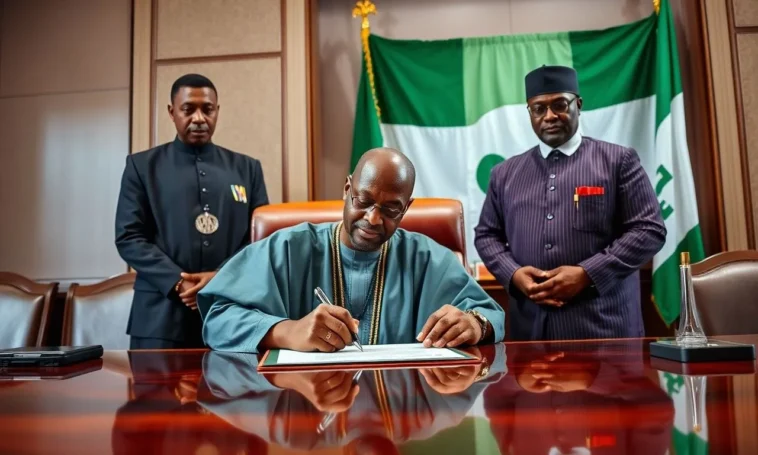
On the evening of February 18, 2026, a heavy silence fell over the State House in Abuja as President Bola Ahmed Tinubu put pen to paper. With that single stroke, the Electoral Act Amendment Bill 2026 became the law of the land, effectively resetting the rules of engagement for the 2027 general elections. The atmosphere was thick with the weight of history—and the shadows of controversy that have trailed this bill through the halls of the National Assembly.
This wasn’t just a routine legislative update; it was a response to the ghosts of 2023. As a reporter for NewsBurrow Nigeria, I watched the faces of the principal officers present. There was a sense of relief among the ruling elite, but outside those fortified walls, the air buzzed with a different energy. Protests had rocked the capital just days prior, with civil society groups demanding a mandate that the National Assembly ultimately watered down into a “discretionary” power.
President Tinubu described the Act as a “gift to the nation,” a robust framework designed to protect the sanctity of the ballot. However, the true nature of this gift remains under intense scrutiny. While the government celebrates “technological advancement,” critics point to the loopholes that remain wide open. For every Nigerian voter, the game has changed, and understanding these shifts is no longer optional—it is a matter of civic survival.
The journey to 2027 has officially begun, and it is paved with new mandates, digital promises, and ancient fears. As we peel back the layers of this 121-page document, we find a Nigeria struggling to marry its high-tech aspirations with its infrastructural realities. It is a story of progress and compromise, written in the ink of a President who knows his political future depends on the very system he has just redesigned.
The Mandatory IReV Revolution: A Digital Promise With a Manual Catch
The most explosive change in the Electoral Act 2026 is the statutory entrenchment of the Bimodal Voter Accreditation System (BVAS) and the Election Results Viewing Portal (IReV). For the first time, the law expressly recognizes these tools, moving them from the realm of INEC “guidelines” into the bedrock of Nigerian law. This is the change Nigerians have died for—a system where the numbers at the polling unit are meant to be the final word.
However, the devil is in the detail of Clause 60. While the Act mandates the electronic transmission of Form EC8A results, it includes a “manual backup” proviso that has sent shockwaves through transparency advocacy groups. If the internet fails—a common occurrence from the creeks of the Delta to the hills of the North—the manual Form EC8A becomes the primary instrument for collation. This “discretionary” flexibility is where the battle for 2027 will be fought.
Civil society groups, led by the Nigeria Civil Society Situation Room, have condemned this non-mandatory approach. They argue that by giving INEC the “authority to prescribe the specific manner” of result transfer, the law creates a loophole large enough to drive a rigging truck through. The shock factor here is simple: while the government claims to be digitizing democracy, they have ensured that the old manual ways remain legally valid in the “event of outages.
Below is a summary of the transmission hierarchy introduced by the 2026 Act:
| Step | Process Description | Legal Status |
|---|---|---|
| 1 | BVAS Accreditation & Result Scanning | Mandatory |
| 2 | Real-time IReV Upload | Mandatory (Network Permitting) |
| 3 | Manual Collation (Form EC8A) | Primary Fallback |
As the 2027 elections approach, the reliability of our telecommunications infrastructure will be as important as the candidates themselves. The Act assumes that the National Communications Commission (NCC) will accurately judge network coverage, but as we’ve seen in the past, “technical glitches” have a strange habit of occurring during the most critical moments of collation.
Voter Identification: The PVC Stays, The NIN Paradox Emerges
In a surprising twist that defied many early “digital-first” proposals, the 2026 Act maintains the Permanent Voter Card (PVC) as the mandatory identification for voting. Lawmakers rejected the push for purely electronically generated IDs or NIN-based voting, citing the need to “preserve the integrity of the voter register.” This means that for all the talk of a “new era,” the physical plastic card remains your only ticket to the ballot box.
But wait—there is a conflicting narrative coming from the National Assembly. While the Presidency insists on the PVC, some legislative summaries suggest a “system of verified alternatives” like the NIN to prevent disenfranchisement due to administrative delays. This ambiguity is a recipe for chaos at the polling units. Imagine a scenario where a voter in Lagos uses a digital ID while a voter in Kano is turned away without a physical PVC; the potential for localized unrest is massive.
Furthermore, the “Continuous Voter Registration” (CVR) cycle has been shortened. The Act reduces the administrative timelines across the board. If you don’t have your PVC now, the window of opportunity is closing faster than ever before. The shocker for many young Nigerians is the realization that their digital footprints on the NIMC database may not be enough to grant them a vote if the physical card distribution fails yet again.
To curb the infamous “PVC market,” the Act has drastically increased penalties. If you are caught buying or selling voter cards, you are looking at a ₦5 million fine and a mandatory two-year stay in a correctional facility. The government is betting that higher fines will deter the foot soldiers of electoral fraud, but critics argue that without addressing the poverty that drives voters to sell their cards, the law is merely a paper tiger.
The Race Against Time: Compressed Timelines and the 2027 Countdown
Prepare for a political season that feels like a sprint. The 2026 Act has significantly reduced the administrative windows that govern the electoral cycle. The “Notice of Election,” which used to be issued 360 days before the polls, has been slashed. Depending on the harmonized final version, we are looking at a window of 180 to 300 days. This means political parties have less time to organize, and INEC has less time to procure sensitive materials.
The timeline for submitting candidate lists has also been squeezed—down from 180 days to just 90 or 120 days. This is a strategic move designed to shorten the period of pre-election litigation, but it puts immense pressure on smaller, less-resourced parties. It effectively favors the political Goliaths who have the machinery to conduct primaries and resolve internal disputes in record time.
Here is a visualization of the timeline shifts:
2022 ACT TIMELINE: |--------------------------------------| 360 Days (Notice)
2026 ACT TIMELINE: |-----------------------| 180-300 Days (Notice)2022 SUBMISSION:   |------------------| 180 Days
2026 SUBMISSION:   |---------| 90-120 Days
This compression isn’t just about logistics; it’s about political tension. By shortening the “election mode” period, the government hopes to minimize national distraction. However, the flip side is a chaotic rush that could lead to administrative errors. For the voter, this means the window to verify their details and participate in the primary process is now much smaller. The era of the “perpetual election cycle” is being forcibly ended by the calendar.
Money, Money, Money: The ₦10 Billion Ceiling for Presidential Ambition
In perhaps the most blatant admission of the rising cost of power, the Electoral Act 2026 has doubled or tripled campaign spending limits. If you want to be the President of Nigeria in 2027, the law now says you can legally spend up to ₦10 Billion—up from the previous limit of ₦5 Billion. Governors can now blow through ₦1 Billion, while Senators are capped at ₦100 Million.
This move has sparked outrage among youth advocates and “Not Too Young To Run” proponents. By raising the financial bar, the National Assembly has effectively “gentrified” the ballot box. It sends a clear message: democracy in Nigeria is for the highest bidder. While the Act introduces “stiff penalties” for exceeding these limits, we have yet to see a single major politician prosecuted for campaign finance violations in Nigeria’s history.
Let’s look at the new price tags for power in Nigeria:
| Office | 2022 Limit (₦) | 2026 New Limit (₦) | Increase |
|---|---|---|---|
| President | 5 Billion | 10 Billion | 100% |
| Governor | 1 Billion | 2 Billion | 100% |
| Senator | 100 Million | 250 Million | 150% |
| House of Reps | 70 Million | 150 Million | 114% |
This “legalization of big money” is a shock factor that many Nigerians are still digesting. It suggests that despite the talk of “innovation” and “fairness,” the 2027 election will likely be the most expensive in our history. The Act does nothing to track the “dark money” that flows through the system, focusing only on the visible spending that parties report. It begs the question: who is this democracy truly for?
Direct Primaries Only: The Death of the ‘Delegate System’?
In a major shift for internal party democracy, the Act has taken a hard line on how candidates are selected. The abolition of “indirect primaries”—the infamous system where a few hand-picked delegates decide the fate of an entire state—is a seismic shift. Parties are now mandated to use either “direct primaries” (where every card-carrying member votes) or “consensus candidacy” under very strict rules.
This change is meant to return power to the party members, but in the Nigerian context, it could lead to even more violence and litigation. Direct primaries are notoriously difficult to monitor and are often marred by parallel congresses. The shock factor here is that the law now requires “Digital Verification of Party Membership Registers.” If your name isn’t on the digital roll submitted to INEC months in advance, you can’t vote in the primary.
This move is intended to stop the “last-minute member” syndrome where aspirants bus in strangers to vote in their favor. However, the technological readiness of Nigerian political parties to maintain secure, unhackable digital registers is highly questionable. We could see a 2027 where the biggest “rigging” happens months before the general election, during the digital manipulation of these party rolls.
Funding Independence: The One-Year Cash Guarantee for INEC
For years, INEC has been at the mercy of the executive’s whims when it comes to funding. The 2026 Act aims to end this by mandating that all election funds must be released to the commission at least one year before the general election. This is a critical move for operational preparedness. It allows INEC to procure ballot papers, technology, and logistics without waiting for “approval from above” during the heat of the campaign.
This financial autonomy is paired with new disciplinary powers for the INEC Chairman. In the wake of the 2023 scandals where some Resident Electoral Commissioners (RECs) acted as rogue agents, the Chairman now has the direct authority to discipline or suspend RECs who violate guidelines. This “system of consequences” is designed to create a more unified command structure during the high-pressure collation phase.
However, the question remains: who monitors the monitors? While INEC gets its money early, the Act doesn’t provide a more transparent way for the public to audit how these billions are spent. As a reporter for NewsBurrow Nigeria, I have seen many “reforms” that simply relocate the corruption rather than eliminate it. The real test will be whether the early release of funds leads to a smoother voting experience in 2027 or just bigger procurement scandals.
The FCT Area Council Polls: The Ultimate Rehearsal for 2027
If you want to see the Electoral Act 2026 in action, keep your eyes on the Abuja FCT Area Council elections. These will be the first “live tests” of the new law. We will see the real-time transmission, the BVAS entrenchment, and the new collation procedures in a controlled environment. It is the dress rehearsal that will determine whether the “manual fallback” is a safety net or a trapdoor.
This Act is a mirror of Nigeria itself—aspirational, complex, and full of hidden traps. It offers the promise of a digital future while keeping one foot firmly planted in the manual past. For the Nigerian voter, the message is clear: the law has been updated, but the responsibility to protect your vote remains yours. Vigilance is the price of democracy, and in 2027, that price will be higher than ever before.
What do you think about these changes? Is the “manual fallback” a necessary evil or a rigging loophole? Is ₦10 Billion too much for a Presidential campaign? Join the conversation on our social media handles and let your voice be heard. The countdown to 2027 has begun, and at NewsBurrow Nigeria, we will be with you every step of the way.
As the legal landscape shifts under the weight of the Electoral Act 2026, the burden of vigilance now rests squarely on the shoulders of the Nigerian electorate. Navigating these complex amendments requires more than just following the headlines; it demands a deep, foundational understanding of the laws that govern our sovereign rights. Without a grasp of the statutory framework, the average voter remains vulnerable to misinformation and the tactical maneuvers of political actors who understand the fine print better than the people they serve.
To truly hold the system accountable in 2027, every Nigerian must move beyond hearsay and equip themselves with the actual letters of the law. Mastering the nuances of the Nigerian Constitution and the updated electoral guidelines is the ultimate shield against disenfranchisement and manipulation. Whether you are a student of political science, a community leader, or a dedicated voter, having the primary legal texts at your fingertips is an essential step toward becoming an informed participant in our democracy.
We have curated a selection of essential legal resources and constitutional guides that are indispensable for anyone looking to master the intricacies of our governance system. We invite you to explore these tools, share your thoughts in the comments below on which reforms concern you most, and subscribe to the Naija NewsBurrow newsletter for exclusive, deep-dive political briefings. Secure your copy of the foundational laws today and ensure your voice is backed by the power of knowledge.
Shop Products On Amazon
Shop Products on Ebay


![Nigerian Constitutional Law: Selected issues By Omotesh [Premium Leather Bound]](https://i.ebayimg.com/images/g/te0AAeSwXMRpa18W/s-l1600.jpg "s l1600")
Trending Similar Stories in the News
Electoral Amendment Act 2026: President Bola Tinubu sign Electoral bill 2026 into law ahead of 2027 elections BBC...
Nigeria’s Tinubu Signs Electoral Bill into Law Despite Push Back Bloomberg.com...
Trending Videos of Electoral Act 2026 Nigeria
2026 Electoral Act: Analysis on implication for Nigeria elections | Daybreak
Similar Popular Articles
#ElectoralAct2026 #NigeriaElections #INEC #Tinubu #CitizenGuide
Electoral Act 2026, Nigeria election laws, INEC 2027 updates, Tinubu signs electoral bill, Nigerian democracy reform



GIPHY App Key not set. Please check settings