
 Ryan Chen

Ncc Spectrum Roadmap 2026-2030
NCC Unveils Spectrum Roadmap 2026-2030: How Wi-Fi 6 Will Slash Data Costs and Boost Speeds
NCC Spectrum Roadmap 2026-2030 is set to revolutionize Nigeria’s digital landscape by opening up the 6GHz and 60GHz bands for unprecedented high-speed connectivity.By Ryan Chen | Technology & Innovation Correspondent, NewsBurrow Network
Table of Contents
- Ncc Spectrum Roadmap 2026-2030
- NCC Unveils Spectrum Roadmap 2026-2030: How Wi-Fi 6 Will Slash Data Costs and Boost Speeds
- The Trillion Digital Blueprint: Nigeria’s Bold Leap into 2030
- Unlocking the Invisible Backbone: Why Spectrum Management is Your New Reality
- The Wi-Fi 6 Revolution: Breaking the Chains of 5GHz Congestion
- Data Cost Crushing: How Efficiency Will Finally Lower Your Bills
- The 60GHz “V-Band”: Bringing Fiber Speeds Without the Shovel
- Visualizing the Data Surge: A Triple Threat by 2030
- Breaking the Congestion Curse: Life in the Smart City
- The Road Ahead: Challenges, Fiber Cuts, and the Billion BRIDGE
- Shop Products On Amazon
- Shop Products on Ebay
- Trending Similar Stories in the News
- Trending Videos of Ncc Spectrum Roadmap 2026-2030
- Similar Popular Articles
The $1 Trillion Digital Blueprint: Nigeria’s Bold Leap into 2030
In a move that mirrors the high-stakes world of global tech competition, the Nigerian Communications Commission (NCC) has officially pulled back the curtain on its most ambitious project yet: the Spectrum Roadmap 2026–2030. This isn’t just another regulatory document gathering dust in a government office; it is a battle cry for the nation’s digital future. Launched during a high-octane stakeholder engagement in Abuja on January 19, 2026, the roadmap signals a radical shift in how Nigeria plans to power its economy, targeting a staggering $1 trillion valuation through digital transformation.
Dr. Aminu Maida, the Executive Vice Chairman of the NCC, didn’t mince words when describing the stakes. He characterized spectrum as an “invisible yet indispensable national resource” that serves as the lifeblood of our modern existence. From the phone in your pocket to the financial platforms securing your transactions, everything hinges on these invisible waves. Our team at Naija NewsBurrow witnessed the urgency in the air as the commission outlined a future where buffering is a relic of the past and high-speed internet is no longer a luxury reserved for the elite in Lagos or Abuja.
This roadmap is anchored on four non-negotiable pillars: bridging the digital divide, driving market-led investment, enhancing consumer experience, and fostering relentless innovation. The goal is clear: prepare Nigeria for a data-hungry era where mobile traffic is projected to nearly triple, skyrocketing from 11.9 exabytes in 2025 to a massive 31.7 exabytes by 2030. It’s a “now or never” moment for the NewsBurrow Network and the millions of Nigerians we serve.
Unlocking the Invisible Backbone: Why Spectrum Management is Your New Reality
To the average user, “spectrum” might sound like jargon, but it is the very reason your video calls drop or your data feels like it’s crawling through a straw. The NCC is essentially widening the highways of the airwaves. By opening the lower 6 GHz and 60 GHz bands, the commission is creating room for the next generation of connectivity. Think of it as opening a ten-lane expressway in a city that previously only had dirt tracks. The Naija NewsBurrow Press Team has learned that this move is designed to alleviate the crushing congestion that currently plagues Nigeria’s urban centers.
Engr. Abraham Oshadami, the Executive Commissioner for Technical Services, emphasized that the decisions made today will dictate Nigeria’s digital trajectory for the next decade. As cloud services, AI, and the Internet of Things (IoT) become integrated into our daily lives, the demand for spectrum is accelerating at a rate that traditional mobile bands simply cannot sustain. The roadmap ensures that as we move toward 2030, the “invisible backbone” is robust enough to carry the weight of a nation’s dreams.
Prudent and transparent management of this resource is the priority. The NCC is moving away from reactive regulation toward a “predictable and enabling” environment. This transparency is expected to give investors the confidence to pour billions into Nigeria’s infrastructure, knowing exactly what the rules of the game will be for the next five years. For the consumer, this translates to reliability—a word not often associated with Nigerian telcos in recent years.
The Wi-Fi 6 Revolution: Breaking the Chains of 5GHz Congestion
The headline-grabbing star of this roadmap is undoubtedly Wi-Fi 6. By opening the lower 6 GHz band for license-exempt use, the NCC is effectively unleashing a connectivity beast. Wi-Fi 6 (802.11ax) is not just “faster Wi-Fi”; it is smarter Wi-Fi. It utilizes Orthogonal Frequency Division Multiple Access (OFDMA), a technology that allows a single router to communicate with multiple devices simultaneously without the “waiting in line” delay that slows down current Wi-Fi 5 networks.
Our NewsBurrow Nigeria tech analysts point out that this is particularly crucial for Nigerian households where multiple family members are streaming, gaming, and working on a single connection. The lower 6 GHz band provides wider channels—up to 160 MHz—which act like extra-wide lanes on a freeway. This means even if your neighbor is also on Wi-Fi 6, your signals won’t crash into each other, drastically reducing interference and “lag.”
Furthermore, Wi-Fi 6 introduces Target Wake Time (TWT), which is a game-changer for mobile-first Nigeria. TWT allows your phone to “sleep” while the router isn’t talking to it, significantly extending battery life. In a country where power supply remains a challenge, a router that helps your smartphone last longer is not just a tech upgrade; it’s a necessity.
Data Cost Crushing: How Efficiency Will Finally Lower Your Bills
The question every Nigerian is asking is: “Will my data get cheaper?” The short answer is yes, but the mechanics are subtle. When the NCC opens license-exempt bands like the 6 GHz and 60 GHz, it removes the heavy licensing fees that Internet Service Providers (ISPs) usually pass down to consumers. Because these bands are “unlicensed,” smaller ISPs and even local businesses can deploy high-speed solutions without the billion-naira entry barrier that characterizes the mobile industry.
Efficiency is the true price-cutter. By reducing network congestion and the “re-transmission” of data packets caused by interference, the actual cost of delivering one gigabyte of data drops for the provider. The NewsBurrow Network anticipates a surge in competition as smaller “neighborhood ISPs” leverage these bands to offer “Unlimited Fiber-to-the-Home” (FTTH) style speeds over the air, challenging the near-monopoly of the big mobile operators.
| Feature | Traditional Wi-Fi (5) | Wi-Fi 6 (802.11ax) | Consumer Benefit |
|---|---|---|---|
| Max Speed | 3.5 Gbps | 9.6 Gbps | Instant 4K/8K downloads |
| Latency | High/Variable | Ultra-Low (20ms) | Lag-free gaming & video calls |
| Device Capacity | Limited (starts lagging) | 4x Higher Capacity | Smart homes with 50+ devices |
| Battery Impact | Drains mobile battery | Target Wake Time (TWT) | Longer smartphone battery life |
The 60GHz “V-Band”: Bringing Fiber Speeds Without the Shovel
While 6 GHz handles your indoor Wi-Fi, the 60 GHz band (also known as the V-Band) is set to revolutionize urban connectivity. This band is a “multi-gigabit” wireless system designed for short-range, extremely high-capacity links. Think of it as “wireless fiber.” For years, Nigerian businesses have struggled with the high cost and slow pace of digging trenches to lay fiber optic cables—often only for them to be cut by road construction a week later.
The 60 GHz band solves this by allowing point-to-point links that can carry massive amounts of data across a street or a campus in seconds. Our Naija NewsBurrow investigation suggests this will be the backbone for smart cities, enabling high-definition surveillance cameras, real-time traffic management, and seamless connectivity for sprawling hospitals and universities. It’s the “last-mile” solution Nigeria has been waiting for.
Because the 60 GHz frequency has a short range and doesn’t penetrate walls well, it is incredibly secure and has almost zero interference issues with other networks. This makes it perfect for dense business districts like Victoria Island in Lagos or the Central Business District in Abuja, where every office building is fighting for airwave space. It’s a surgical strike for high-speed internet.
Visualizing the Data Surge: A Triple Threat by 2030
The NCC’s projections for data consumption are nothing short of a tidal wave. In 2025, Nigeria’s total mobile data traffic sat at roughly 11.9 exabytes. By 2030, that number is expected to hit 31.7 exabytes. To help you visualize this massive leap, imagine a glass of water today becoming a gallon bucket in just five years. Without the Spectrum Roadmap 2026–2030, the entire network would effectively choke under its own weight.
The surge is driven by what our NewsBurrow Nigeria team calls the “Triple Threat”:
- AI Integration: Every smart app now uses background AI processing that eats data.
- Video Domination: Short-form video and high-definition streaming are becoming the primary way Nigerians consume information.
- The IoT Explosion: From smart meters to connected cars, billions of new devices are “waking up” in Nigeria.
To prepare for this, the NCC isn’t just looking at the 6GHz band. They are eyeing the “Second Digital Dividend”—the 450MHz and 600MHz bands. These low-frequency bands are the secret sauce for rural connectivity. While high-frequency bands like 60GHz provide speed, these low bands provide distance, allowing a single mast to cover vast riverine or mountainous areas where building towers is traditionally impossible.
Breaking the Congestion Curse: Life in the Smart City
We’ve all been there: you’re at a crowded stadium, a busy airport, or a packed church, and even though you have “full bars,” your WhatsApp messages won’t send. This is “spectrum congestion.” Wi-Fi 6 and the new roadmap are designed to break this curse. By using MU-MIMO (Multi-User, Multiple Input, Multiple Output) technology, routers can now talk to eight devices at the exact same millisecond, rather than cycling through them one by one.
In the new “Smart City” vision of the NCC, public spaces will be equipped with Wi-Fi 6 nodes that can handle thousands of concurrent users. Our Naija NewsBurrow Press Team believes this will finally make “Public Wi-Fi” a viable utility in Nigeria, much like electricity or water. Imagine a student in a public library in Kano or a trader in Onitsha market accessing global markets with the same speed as a trader in Wall Street. That is the true “shock factor” of this roadmap: the democratization of speed.
However, there’s a catch. For this to work, the hardware must follow. Most Nigerians are still using Wi-Fi 4 or 5 routers and smartphones. While the NCC is opening the airwaves, the NewsBurrow Network encourages consumers and businesses to start auditing their hardware. The spectrum is coming, but if your device is an old clunker, you’ll still be stuck in the slow lane while the rest of the country zooms by.
The Road Ahead: Challenges, Fiber Cuts, and the $2 Billion BRIDGE
As immersive as this vision is, we must confront the “elephants in the room.” Nigeria’s telecom infrastructure is under constant siege. In 2025 alone, major operators like MTN reported over 19,000 incidents of fiber cuts. Vandalism, road construction, and equipment theft are the silent killers of broadband. The NewsBurrow Network has closely monitored the “BRIDGE” Project—a $2 billion initiative designed to create a national digital backbone that is more resilient to these attacks.
The Spectrum Roadmap is the software, but BRIDGE is the hardware. The government is finally enforcing the “Critical National Infrastructure” (CNI) designation, meaning tampering with a telecom mast or fiber route now carries severe criminal penalties. Without this protection, the faster speeds promised by the 2026-2030 roadmap would remain a dream, as the “invisible waves” still need physical towers to travel from.
Join the Conversation: The NCC has invited all stakeholders to review the draft guidelines before they are finalized. At NewsBurrow Nigeria, we believe the power of the digital economy belongs to you. Will these moves finally fix your internet woes, or is this another “government promise” on paper? Share your thoughts with us on our social platforms. The digital revolution is here—are you ready for the speed of 2030?
For more in-depth analysis on how the NCC is shaping your future, stay tuned to the NewsBurrow Network.
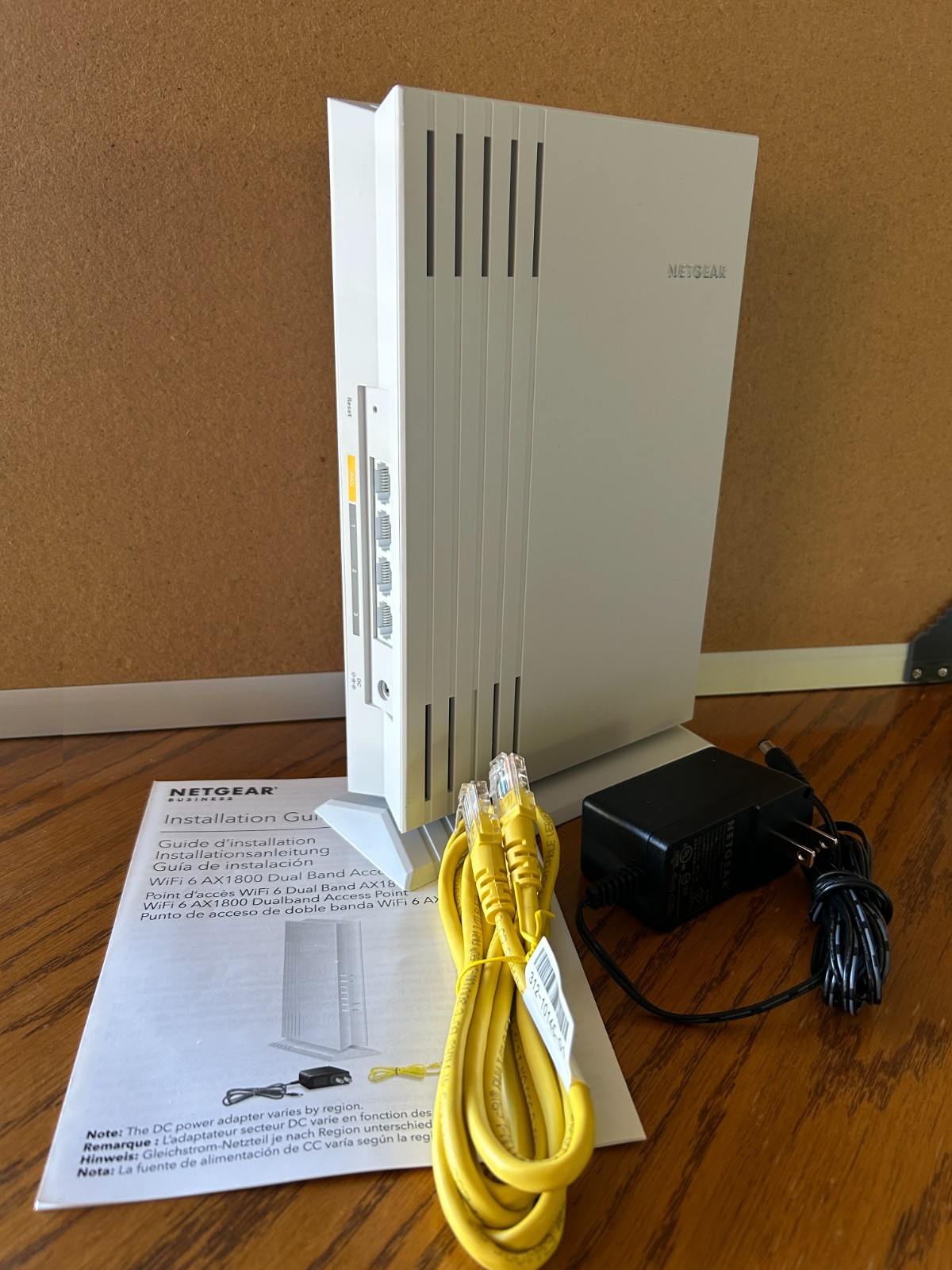
As the Nigerian Communications Commission paves the way for a revolutionary digital shift through the Spectrum Roadmap 2026–2030, the promise of ultra-fast internet and reduced data costs is finally within reach for millions of Nigerians. However, the true bottleneck for many households and businesses isn’t just the external network, but the outdated hardware sitting on their desks or mounted on their walls. To truly capitalize on the NCC’s opening of the 6 GHz and 60 GHz bands, upgrading to compatible hardware is no longer a luxury—it is a technical necessity for anyone serious about high-speed connectivity.
The introduction of Wi-Fi 6 technology brings a sophisticated suite of features like OFDMA and Target Wake Time, specifically engineered to handle the heavy data traffic of modern smart homes and busy offices. While the national infrastructure improves, ensuring your internal network can distribute these “multi-gigabit” speeds is the final piece of the puzzle. Without a modern router capable of managing these new frequency bands, users risk being stuck in the digital slow lane, regardless of how much the national broadband penetration increases over the next four years.
Our team at NewsBurrow Network has meticulously researched the most reliable and high-performance equipment available to help you make this transition seamless. We invite you to join the conversation in the comments section below and share your experiences with current internet speeds. For more exclusive tech insights and updates on Nigeria’s digital journey, ensure you subscribe to the Naija NewsBurrow newsletter today to stay ahead of the curve.
Shop Products On Amazon
Shop Products on Ebay


Trending Similar Stories in the News
NCC unveils spectrum roadmap to power Nigeria’s $1tr digital economy MSN...
Trending Videos of Ncc Spectrum Roadmap 2026-2030
The Nigerian Communications Commission Roadmap; EVC NCC Speaks on the development
Similar Popular Articles
#NCC #NigeriaTech #WiFi6 #DigitalEconomy #Broadband
NCC, Spectrum Roadmap, Nigeria Broadband, Wi-Fi 6, Digital Economy



GIPHY App Key not set. Please check settings