
 David Goldberg
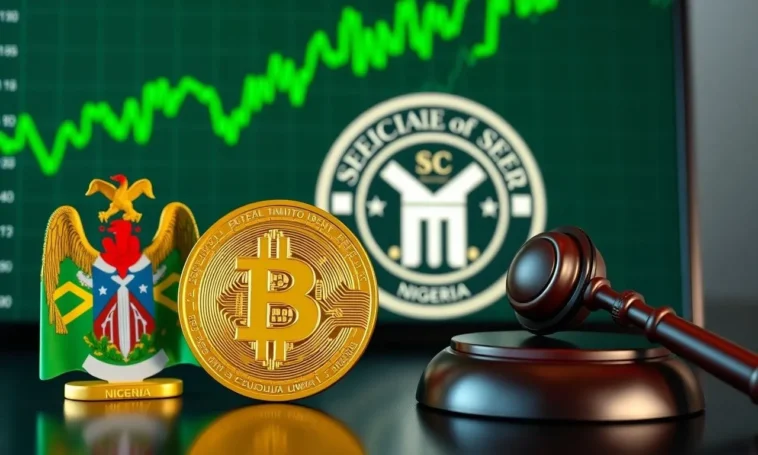
Nigeria Crypto Legal Status 2026
Is Crypto Banned in Nigeria? 2026 Legal Status, SEC Rules, and New Tax Laws Explained
Nigeria crypto legal status 2026 has officially transitioned from a period of uncertainty to a fully regulated and lawful landscape under the Securities and Exchange Commission.By David Goldberg (@DGoldbergNews) – Business & Economics Lead, NewsBurrow Nigeria
Table of Contents
- Nigeria Crypto Legal Status 2026
- Is Crypto Banned in Nigeria? 2026 Legal Status, SEC Rules, and New Tax Laws Explained
- The Great Flip: How Nigeria’s Crypto Narrative Shifted from ‘Ban’ to ‘Blueprint’ in 2026
- Decoding the ISA 2025: Your Digital Assets Are Now Official Securities
- The New Vanguard: Meet the SEC-Licensed Exchanges Leading the Charge
- The End of Anonymity: Mandatory NIN and TIN Linkage for All
- The 2026 Tax Trap: From Capital Gains to 25% Income Levies
- Estimated Crypto Tax Growth vs. User Adoption (2023–2026)
- Surviving the New Era: A Step-by-Step Security Blueprint
- The Future Verdict: Is Nigeria the New Africa Crypto Hub?
- Shop Products On Amazon
- Shop Products on Ebay
- Trending Similar Stories in the News
- Trending Videos of Nigeria Crypto Legal Status 2026
- Similar Popular Articles
The Great Flip: How Nigeria’s Crypto Narrative Shifted from ‘Ban’ to ‘Blueprint’ in 2026
If you still have vivid nightmares of the 2021 banking freeze—where millions of Naira were trapped in digital limbo—you aren’t alone. For years, the Nigerian crypto landscape felt like a high-stakes game of hide-and-seek between tech-savvy youths and the Central Bank of Nigeria (CBN). However, as of February 2026, the script has been completely flipped. The era of “crypto as a crime” has officially ended, replaced by a sophisticated, albeit heavy-handed, regulatory blueprint.
This isn’t just a policy tweak; it’s a total reimagining of the Nigerian financial sector. We’ve moved from the “Binance ban” chaos of 2024 to a 2026 reality where the Securities and Exchange Commission (SEC) is the new sheriff in town. The “gray area” has been paved over with the Investments and Securities Act (ISA) 2025, which treats your Bitcoin not as “magic internet money,” but as a legitimate financial security.
The shock factor for many remains the speed of this transition. Just eighteen months ago, government officials were blaming P2P traders for the Naira’s freefall. Today, those same officials are inviting exchanges to the table, provided they have ₦500 million in paid-up capital and a direct line to the taxman. It’s a bold, expensive, and controversial evolution that has the global crypto community watching Lagos with bated breath.
Decoding the ISA 2025: Your Digital Assets Are Now Official Securities
The “Wild West” days are over. Under the Investments and Securities Act (ISA) 2025, the legal definition of securities has been surgically expanded to include every digital asset sitting in your wallet. Whether you hold Ethereum, Solana, or the latest memecoin, the SEC now views these as “investment contracts.” This classification is the cornerstone of the 2026 legal framework, giving the government the authority to protect—and tax—every transaction.
This landmark law replaces the outdated 2007 statute, effectively dragging Nigeria’s capital market rules into the 21st century. For the average trader, this means that while your assets are “legal,” they are also under the microscope. The SEC’s toolkit has grown from simple warnings to include the power to freeze accounts, seize assets, and even demand data from telecom providers to probe market manipulation.
Critics argue that this classification stifles the very decentralization that makes crypto attractive. However, the government’s stance is clear: if it has value and it’s traded in Nigeria, the SEC has a seat at the table. This is the price of legitimacy. Below is a breakdown of how the SEC categorizes different market participants in this new era.
| Participant Category | Primary Regulatory Requirement | Enforcement Authority |
|---|---|---|
| Retail Traders | NIN/TIN Linkage & KYB | FIRS / SEC |
| Exchanges (VASPs) | ₦500M Capital + SEC License | SEC / CBN |
| P2P Merchants | VARA Registration | VARC / NCC |
The New Vanguard: Meet the SEC-Licensed Exchanges Leading the Charge
The most significant shift for Nigerian traders in 2026 is where they are allowed to trade. The “big three”—Busha, Quidax, and Luno—have emerged as the pillars of the new regulated market. After navigating the SEC’s grueling Accelerated Regulatory Incubation Programme (ARIP), these platforms are now the “safe havens” for Nigerian capital. Trading here means your Naira deposits are recognized by the banking system, a luxury we haven’t seen in years.
However, this legitimacy comes with a trade-off. These platforms are essentially extensions of the national tax and security infrastructure. Every time you swap USDT for Naira on a licensed exchange, the transaction is logged and reported. While this has boosted institutional confidence, it has created a divide between those who crave the safety of a license and those who still cling to the anonymity of the offshore past.
The “shock” for many is the exclusion of global giants. Platforms like Binance and Kraken, which once dominated the Nigerian market, currently operate without a local license, often remaining behind telecom firewalls. For the first time, local exchanges have the upper hand, leveraging their SEC approval to offer seamless bank transfers that the international “outlaws” simply cannot match.
The End of Anonymity: Mandatory NIN and TIN Linkage for All
On January 1, 2026, the Nigerian government dropped the hammer on anonymous trading. Under the Nigeria Tax Administration Act (NTAA) 2025, no Virtual Asset Service Provider (VASP) can allow you to trade without first validating your National Identification Number (NIN) and Tax Identification Number (TIN). Your digital wallet is now officially tied to your real-world identity.
This isn’t just about identity; it’s about visibility. By linking these IDs, the Nigeria Revenue Service (NRS) can cross-reference your crypto profits with your declared income. If you’re living a “crypto billionaire” lifestyle but filing “zero income” tax returns, the system is designed to flag you instantly. It’s a level of surveillance that has sent shockwaves through the P2P community.
The enforcement is brutal for the platforms too. Any exchange caught allowing unverified users faces a staggering ₦10 million fine for the first month, rising by ₦1 million every month thereafter. In 2026, compliance isn’t a suggestion; it’s a survival mechanism. For users, the message is simple: if you want to use the official rails, you must be prepared to be seen.
The 2026 Tax Trap: From Capital Gains to 25% Income Levies
Death and taxes have finally caught up with the blockchain. As of 2026, the tax regime for crypto in Nigeria has moved from “theoretical” to “aggressive.” The old 10% flat Capital Gains Tax (CGT) has been replaced by a more complex, progressive system. If you are a high-volume trader, you might find yourself in a tax bracket as high as 25% on your realized gains.
The FIRS (now working closely with the NRS) has issued a “March 31” deadline for individuals to file their annual crypto returns. What’s truly “shocking” is the integration of blockchain analytics. The government isn’t just waiting for you to tell them what you made; they are using sophisticated tools to track on-chain movements. If a large sum of USDT moves from a private wallet into a Nigerian bank account, the taxman is already waiting.
Estimated Crypto Tax Growth vs. User Adoption (2023–2026)
  (Revenue in Billions USD)

  3.0 |                                      * (Est. $2.8B)
      |                                   * 2.5 |                                * |                             * 2.0 |                          * |                       * 1.5 |                    * (Actual $1.4B)
      |                 * 1.0 |              * |           * 0.5 |        * |     * 0.0 |___________________________________________
       2023      2024      2025      2026 (Projected)
Graph: Showing the aggressive climb in government crypto revenue expectations following the 2025/2026 tax reforms.
Surviving the New Era: A Step-by-Step Security Blueprint
Navigating Nigeria’s crypto waters in 2026 requires more than just a “buy low, sell high” mentality. It requires a Compliance Strategy. If you want to avoid having your bank account flagged or receiving a letter from the FIRS, you must adapt your workflow. Here is the 2026 blueprint for safe trading:
- Use SEC-Approved On-Ramps: Stick to licensed platforms like Quidax or Busha for Naira deposits. This ensures your money enters the banking system through legal “green channels.”
- Link Your IDs Early: Don’t wait for a trade to be blocked. Proactively update your NIN and TIN on your preferred exchange.
- Maintain a ‘Tax Diary’: Record every trade, the exchange rate on that day, and the fees paid. The NRS allows for some deductions, but only if you have the receipts.
- Hardware Wallets are Non-Negotiable: With increased regulation comes increased targeting by hackers. Keep your long-term “HODL” assets off exchanges and in cold storage.
- Watch the P2P Scams: While P2P remains active, it’s now the primary target for both scammers and regulators. Only trade with verified “Pro” merchants.
The Future Verdict: Is Nigeria the New Africa Crypto Hub?
As we move through 2026, the question remains: Did Nigeria “kill” the vibe, or did it save the industry? By legalizing and regulating, the government has cleared the path for institutional money—pension funds and insurance companies—to finally look at digital assets. We are no longer the “crypto capital of the underground,” but the “digital asset capital of Africa.”
However, the heavy taxation and strict identity linkage have a downside. We are already seeing a “brain drain” of small-scale retail traders moving back into the shadows of Telegram and WhatsApp P2P groups to avoid the 25% tax bite. The government’s next challenge will be ensuring that the “formal market” remains attractive enough that people don’t flee back to the unregulated darkness.
What do you think? Is the 2026 regulatory framework a “protection” for your wealth, or just a new way for the government to take a piece of your hard-earned gains? Join the conversation in the comments below! At NewsBurrow Nigeria, we want to hear your on-the-ground experiences with the new SEC rules. Are the licensed exchanges working for you, or do you miss the “wild” days of 2022?
With Nigeria’s crypto landscape evolving into a strictly regulated and tax-transparent environment, the stakes for protecting your digital wealth have never been higher. As the government integrates blockchain analytics and mandatory ID linkage, the security of your assets moves from a personal choice to a critical financial necessity. Relying solely on exchange wallets—now essentially digital extensions of the national tax infrastructure—leaves your long-term holdings vulnerable to platform risks and potential regulatory freezes.
For the savvy Nigerian investor, the transition to the 2026 legal framework means prioritizing self-custody for any significant portfolio. By moving your private keys away from the internet and into a dedicated physical device, you regain true ownership and bypass the vulnerabilities inherent in centralized platforms. This proactive approach not only safeguards your gains from cyber threats but also ensures your financial independence remains intact as the market continues to mature under SEC oversight.
Are you prepared to secure your digital future in this new era of regulated finance? We invite you to join the NewsBurrow community by sharing your security experiences in the comments below and subscribing to our newsletter for the latest breakthroughs in Nigerian fintech. Take a moment to explore our top recommendations for world-class protection tools that align perfectly with the rigorous security demands of today’s market.
Shop Products On Amazon
Shop Products on Ebay






Trending Similar Stories in the News
Tinubu signals cautious path on virtual asset regulation TechCabal...
Crypto Legal Countries List 2026 [Bitcoin Banned & Friendly] DemandSage...
Trending Videos of Nigeria Crypto Legal Status 2026
2026 Crypto Predictions! #crypto #bitcoin #ethereum #xrp #dogecoin #shibainu #altcoins
Similar Popular Articles
#NigeriaCrypto #BitcoinNigeria #SEC #DigitalAssets #NaijaTech
Nigeria crypto legal status, SEC Nigeria crypto rules, crypto tax Nigeria 2026, Bitcoin legal Nigeria, licensed crypto exchanges Nigeria



GIPHY App Key not set. Please check settings