
 David Goldberg
2026 Nigerian Budget Insertions
2026 Budget Scandal: Stop Frivolous Billion-Naira Insertions for Elite Comfort While Nigerians Suffer
2026 Nigerian Budget insertions totaling billions for elite luxuries have sparked a national outcry as millions of citizens face unprecedented economic hardship.2026 Budget Scandal: Stop Frivolous Billion-Naira Insertions for Elite Comfort While Nigerians Suffer
By David Goldberg (@DGoldbergNews) | Business & Economy Editor, NewsBurrow Network
Table of Contents
- 2026 Nigerian Budget Insertions
- 2026 Budget Scandal: Stop Frivolous Billion-Naira Insertions for Elite Comfort While Nigerians Suffer
- The Scathing Reality of Nigeria’s 2026 Fiscal Blueprint
- Luxury on Wheels: The ₦11.25 Billion Presidential Fleet Surge
- Paper Tigers: Why is the Head of Service Budgeting ₦2.46 Billion for Stationery?
- Debt Trap 2026: Borrowing ₦15.52 Trillion Just to Stay Afloat
- The CSJ Red Flags: Recycled Waste from the 2025 Fiasco
- PwC’s Grim Forecast: The Road to 141 Million Poor Nigerians
- Villa Isolation: ₦7 Billion for a Solar Grid While the Grid Collapses
- Bureaucratic Bloat: The Hidden Cost of 12 New MDAs
- The NASS Factor: Scrutiny or Rubber-Stamping?
- Abandoned Legacies: The ₦17 Trillion Project Graveyard
- A Call for Fiscal Sanity: Overhauling the People’s Budget
- Shop Products On Amazon
- Shop Products on Ebay
- Trending Similar Stories in the News
- Trending Videos of 2026 Nigerian Budget Insertions
- Similar Popular Articles
As the curtains rise on the 2026 fiscal year, Nigeria finds itself standing at a precarious crossroads between institutionalized extravagance and a deepening humanitarian crisis. The NewsBurrow Network has closely monitored the unfolding drama surrounding the ₦58.18 trillion “Budget of Consolidation, Renewed Resilience, and Shared Prosperity.” However, beneath the glossy veneer of its title lies a disturbing narrative of fiscal indiscretion that has ignited a firestorm of public outrage. While the Presidency promises economic stability, the fine print of the Appropriation Bill reveals a “betrayal of mandate” that prioritizes the comfort of the political elite over the survival of 141 million citizens.
The numbers are as staggering as they are heartbreaking. At a time when PricewaterhouseCoopers (PwC) warns that 62% of the population is slipping into multidimensional poverty, the federal government has seen fit to double down on luxuries. Our team at NewsBurrow Nigeria analyzed the proposal to find that ₦11.25 billion has been earmarked for the presidential fleet alone—a 135% surge from the previous year. This disconnect between the marble floors of Aso Rock and the empty pots of rural households is not just a policy failure; it is a moral crisis that demands immediate national dialogue.
The Scathing Reality of Nigeria’s 2026 Fiscal Blueprint
The 2026 budget is the largest in Nigeria’s history, yet it carries the heaviest burden of debt and despair. With a projected revenue of only ₦34.33 trillion, the government is staring at a massive ₦23.85 trillion deficit. According to the Naija NewsBurrow Press Team, this means nearly 30% of the entire budget—approximately ₦15.52 trillion—is dedicated solely to debt servicing. We are effectively borrowing to pay for past borrowings, leaving the future of Nigerian children as collateral for a system that refuses to tighten its own belt.
The shock factor remains in the contrast. While the government defends these figures as necessary for “macrostability,” the average Nigerian sees a different reality. Inflation has eroded purchasing power to the point where “three square meals” is no longer a standard but a luxury. The NewsBurrow Network highlights that this budget, rather than serving as a lifeline, appears to be a sieve where public funds leak into “miscellaneous” baskets that serve no clear developmental purpose. It is a fiscal blueprint designed for a nation that does not exist—a prosperous elite island surrounded by a sea of poverty.
| Category | Amount (₦ Trillion) | % of Total Budget |
|---|---|---|
| Total Expenditure | 58.18 | 100% |
| Capital Expenditure | 26.08 | 44.8% |
| Debt Servicing | 15.52 | 26.7% |
| Recurrent (Non-Debt) | 15.25 | 26.2% |
| Projected Deficit | 23.85 | 41.0% |
Luxury on Wheels: The ₦11.25 Billion Presidential Fleet Surge
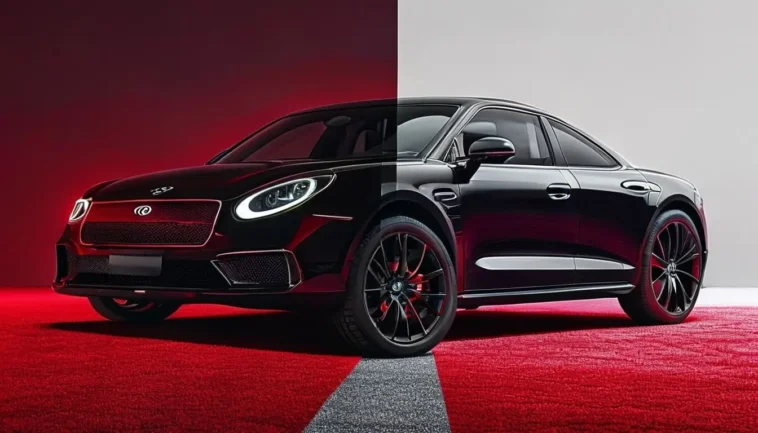
The most glaring symbol of this fiscal tone-deafness is the ₦11.25 billion allocation for the presidential fleet. In 2025, the figure stood at a more modest—though still criticized—₦4.76 billion. The 135% increase in 2026 is an affront to the millions of Nigerians currently trekking to work because they can no longer afford the “transportation tax” imposed by fuel subsidy removals and currency devaluation. Our investigators found that these funds are largely destined for SUV replacements and luxury operational vehicles, further isolating the leadership from the dusty realities of Nigerian roads.
Critics argue that while the government preaches “Renewed Hope,” its spending habits reflect a “Renewed Indulgence.” Why does a presidency requires such an astronomical sum for mobility in a year where the national rail projects and urban mass transit systems are begging for completion? The NewsBurrow Network poses this question: Is the security of the elite’s comfort more vital than the mobility of the workforce? When ₦11 billion can build hundreds of primary healthcare centers, spending it on armored convoys is a choice that speaks volumes about national priorities.
Paper Tigers: Why is the Head of Service Budgeting ₦2.46 Billion for Stationery?
In an age where the Federal Government touts its “1Gov Enterprise Content Management System” and “Paperless Service Portal,” the stationery budget has somehow ballooned. The Head of the Civil Service of the Federation (HCSF) and ten other ministries have collectively proposed ₦2.46 billion for paper, ink, and toner. This is a 42.3% increase from the 2025 budget. Our team at NewsBurrow Nigeria finds this particularly ironic given the administration’s stated commitment to climate adaptation and cost minimization through digitalization.
The Ministry of Justice, for instance, has quadrupled its stationery budget to ₦525 million. This “copy-paste” culture of budgeting suggests that either the digitalization drive is a farce or that these lines are being used as convenient “slush funds” for unspecified expenses. Stationery is an item that the private sector has largely phased out to save costs, yet in the Nigerian public sector, it remains a ₦50 billion yearly drain. It is time the government stops hiding behind “stationery” and starts being transparent about where this money is truly going.
Debt Trap 2026: Borrowing ₦15.52 Trillion Just to Stay Afloat
Nigeria is no longer borrowing to build; it is borrowing to survive. The 2026 budget earmarks ₦15.52 trillion for debt servicing—nearly 30% of total spending. This exceeds the total allocation for the entire health and education sectors combined. Our analysts describe this as “economic sabotage of the highest order,” where the heritage of future generations is auctioned off to service a debt-fueled lifestyle that has failed to deliver tangible infrastructure or security.
The Naija NewsBurrow Press Team has noted that this burden forces the government into a vicious cycle: borrowing to pay interest, which increases the debt, requiring even more borrowing. While the President promises a “decisive break” from poor execution, the numbers tell a story of stagnation. We are paying creditors before we pay teachers, and we are funding interest rates before we fund irrigation for starving farmers. This is the definition of a debt trap, and the 2026 budget is the lock that keeps us inside it.
    BUDGET ALLOCATION VISUALIZATION (ASCII)
    ---------------------------------------
    Capital Exp:  [####################] 45%
    Debt Service: [############        ] 27%
    Recurrent:    [###########         ] 26%
    Waste/Misc:   [##                  ] 2%

    *Debt Service now almost equals Capital Expenditure!
The CSJ Red Flags: Recycled Waste from the 2025 Fiasco
The Centre for Social Justice (CSJ) has flagged 254 items in the 2026 proposal as “frivolous, inappropriate, or wasteful.” These items range from ₦63.8 million for State House rent—despite the government owning the property—to billions for “annual routine maintenance” of the Presidential Villa. These are not new mistakes; they are recycled errors. Many of these line items are exact replicas of the 2025 budget, suggesting a lack of rigorous planning in the Ministries, Departments, and Agencies (MDAs).
Even more troubling are the vague descriptions. Terms like “empowerment” and “sensitization” are used as placeholders for projects without locations or measurable outcomes. For example, the Ministry of Water Resources has budgeted ₦450 million for “rural access roads,” a project that clearly falls outside its mandate. The NewsBurrow Network urges the National Assembly to perform its oversight duty and strike out these “ghost projects” that only serve as vehicles for political patronage rather than public service.
PwC’s Grim Forecast: The Road to 141 Million Poor Nigerians
The most sobering statistic in the 2026 horizon is the projection that 62% of Nigerians—about 141 million people—will live in poverty. PwC’s report, “Turning Macroeconomic Stability into Sustainable Growth,” warns that even if inflation moderates, real wages will continue to lag behind. For millions, the “shared prosperity” promised by the Presidency is a distant mirage. NewsBurrow Nigeria warns that this level of inequality is a ticking time bomb for social stability.
Food inflation remains the primary predator of the Nigerian household. poort families now spend up to 70% of their total income just to eat. In the North, security challenges have crippled agricultural output, while in the South, “working poverty” is on the rise. We are seeing a “shrinking mid-market” where previously comfortable families are sliding into the “near-poor” category. Without aggressive social safety nets that actually reach the vulnerable, the 2026 budget will be remembered as the year the middle class finally vanished.
Villa Isolation: ₦7 Billion for a Solar Grid While the Grid Collapses
Symbolism in politics matters, and the 2026 budget provides a stark one: the Presidency has earmarked ₦7 billion for its own “mini solar grid” and electrical installations. While the national power grid collapses with frustrating regularity—leaving businesses in the dark and hospitals relying on lanterns—the seat of power is ensuring its own uninterrupted light. This “Villa Isolation” strategy perfectly encapsulates the current divide.
The Naija NewsBurrow Press Team argues that if the Presidency felt the same darkness that plagues the streets of Lagos, Kano, and Port Harcourt, the urgency to fix the national grid would be far greater. Instead, ₦3.84 billion is allocated for “ongoing maintenance” of the Villa facilities. This is not just about electricity; it is about empathy. When leadership insulates itself from the failures of its own infrastructure, it loses the moral authority to ask citizens to “endure” for the sake of reform.
Bureaucratic Bloat: The Hidden Cost of 12 New MDAs
Despite recommendations from the Oronsaye Report to prune the cost of governance, the 2026 budget introduces 12 new MDAs. These agencies, primarily in the health and education sectors, require an initial ₦60.62 billion in “take-off grants.” This expansion of bureaucracy comes at a time when existing agencies are underfunded and overlapping in their functions. It is a classic case of expanding the government while the people are shrinking their belts.
The NewsBurrow Network has found that many of these new agencies serve as political rewards rather than functional necessities. We see specialised training institutions, like the Centre for Management Development (CMD), being used to supply “HiJet trucks” for constituency empowerment—turning an educational body into a political warehouse. This distortion of mandates makes it impossible to track efficiency and ensures that the “consolidation” the President speaks of remains an elusive goal.
The NASS Factor: Scrutiny or Rubber-Stamping?
The National Assembly (NASS) holds the power of the purse, yet it has historically been an accomplice in budget padding. The 2026 Appropriation Bill is now in their hands. Will they act as the guardians of the people’s wealth, or will they add their own “frivolous insertions” to the pile? The record-high allocation for INEC—ahead of the 2027 elections—already suggests that the political class is more focused on the next vote than the current hunger.
Our team at NewsBurrow Nigeria calls on every Senator and Representative to remember their constituents. The practice of inserting “empowerment” projects that cannot be verified must end. A budget of ₦58 trillion requires ₦58 trillion worth of oversight. If the National Assembly fails to prune the billions for luxury cars and redundant stationery, they are not just rubber-stamping a document; they are rubber-stamping the suffering of 141 million Nigerians.
Abandoned Legacies: The ₦17 Trillion Project Graveyard
Nigeria is a graveyard of uncompleted projects. There are currently over 56,000 stalled or abandoned projects across the country, requiring an estimated ₦17 trillion to finish. Despite this, the 2026 budget proposes ₦3.5 trillion in *new* projects. This defies the government’s own Abridged Budget Call Circular, which mandated a 70% rollover of existing capital allocations. Why start new foundations when the previous ones are already crumbling into the soil?
The NewsBurrow Network highlights this as a major planning failure. New projects are often used to secure new kickbacks, while completing old ones offers less “political excitement.” However, for the Nigerian citizen, an uncompleted road or an empty hospital shell provides zero value. We demand a shift toward a “Completion Budget,” where every kobo is directed at finishing what was started before a single new brick is laid for the sake of 2026 optics.
A Call for Fiscal Sanity: Overhauling the People’s Budget
The 2026 budget must be more than a mountain of debt and a monument to elite luxury. It must be a living document that breathes life back into the Nigerian economy. As it stands, the “frivolous insertions” are not just numbers; they are stolen opportunities. They represent the hospitals that won’t be built, the schools that won’t have books, and the farmers who won’t have security. We at NewsBurrow Nigeria join the Punch Editorial Board and millions of voices in demanding a total overhaul of this proposal.
Fiscal sanity is not a suggestion; it is a survival requirement. The government must lead by example—if you ask the public to endure the pain of subsidy removal, you cannot ask them to fund ₦11 billion for your cars. Join the conversation on the NewsBurrow Network. Share your thoughts, hold your representatives accountable, and let us demand a budget that truly consolidates hope rather than debt. The 141 million projected poor Nigerians deserve more than “renewed resilience”; they deserve a government that puts their bread before its own butter.
As the national grid continues to struggle under the weight of systemic failures, the 2026 budget’s focus on insulating the political elite highlights a growing necessity for citizen-led self-sufficiency. While the Presidential Villa secures its future with a multibillion-naira private solar infrastructure, ordinary Nigerian households and small business owners are left to navigate the darkness of frequent grid collapses alone. This widening gap in energy security underscores a critical shift where reliable, independent power is no longer a luxury, but a vital tool for economic survival and domestic stability.
The NewsBurrow Network recognizes that waiting for centralized power reforms is a gamble many can no longer afford in this challenging fiscal climate. Taking control of your own energy needs is the most practical way to protect your family’s comfort and your business productivity from the whims of a failing national infrastructure. We encourage our readers to proactively seek out sustainable solutions that provide the same “Villa-style” uninterrupted power without the wait for government intervention.
Explore our curated recommendations below to find high-performance energy solutions that fit your home and budget, ensuring you stay powered even when the national grid fails. We invite you to join the conversation in the comments section and subscribe to the Naija NewsBurrow newsletter for more exclusive insights on navigating Nigeria’s economic landscape. Start your journey toward energy independence today by reviewing these top-rated power alternatives.
Shop Products On Amazon
Shop Products on Ebay



Trending Similar Stories in the News
2026 budget: Stop frivolous insertions Punch Newspapers...
Trending Videos of 2026 Nigerian Budget Insertions
Analysis on the 2026 budget and what it means for Nigeria | Daily Politics
Similar Popular Articles
#NigeriaBudget #Tinubu #EconomicJustice #NaijaNews
2026 Nigerian Budget, Punch Editorial, Tinubu Budget 2026, Nigeria Poverty, Government Spending



GIPHY App Key not set. Please check settings