
 BurrowBoss
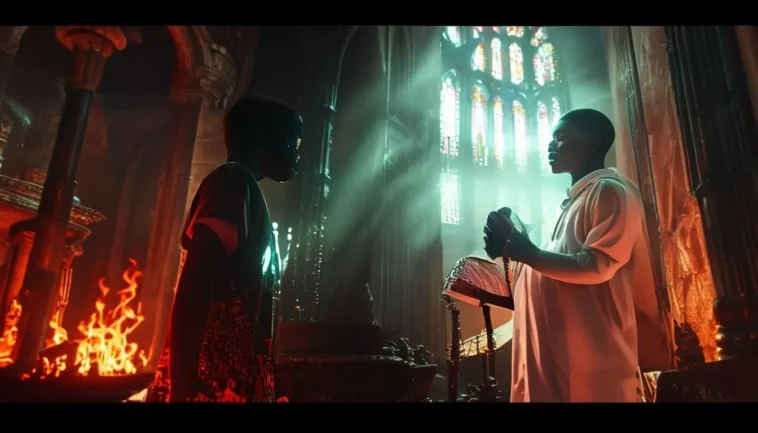
Neo-paganism Among Nigerian Youth
Catholic Church Declares War on Rising Neo-Paganism and Ritual Syncretism Among Nigerian Youth
Neo-paganism among Nigerian youth has become a focal point of concern for religious leaders as the Catholic Church launches a nationwide renewal of faith education to counter the surge of occult practices.By Aiden Hughes (@AidenReports)
Table of Contents
- Neo-paganism Among Nigerian Youth
- Catholic Church Declares War on Rising Neo-Paganism and Ritual Syncretism Among Nigerian Youth
- The Ibadan Manifesto: Deciphering the 2026 Spiritual Emergency
- The Gen Z Rebellion: Why Nigerian Youth are Swiping Left on the Pews
- The Dark Allure: When Desperation Meets the Occult
- Digital Deities: The Algorithmic Rise of the Neo-Shrine
- Spiritual Warfare: The 2026 Counter-Offensive
- The Moral Fabric: What’s at Stake for Nigeria’s Future?
- A Final Word: Can Cross and Culture Truly Coexist?
- Shop Products On Amazon
- Shop Products on Ebay
- Trending Similar Stories in the News
- Trending Videos of Neo-paganism Among Nigerian Youth
- Similar Popular Articles
The quiet, incense-filled halls of the Catholic Archdiocese of Ibadan became a strategic war room this January as Nigeria’s religious landscape faced a seismic shift. For four days, from January 20 to 23, 2026, the National Association of Directors of Religious Education (NADRE) sat in a high-stakes Annual General Meeting (AGM) to confront a ghost they thought had been laid to rest a century ago. The verdict was unanimous and chilling: Christianity is losing its grip on the Nigerian youth, and the ancient altars of “Neo-Paganism” are calling them back.
This isn’t a mere academic observation. It is a full-blown spiritual emergency. Across the nation, from the vibrant streets of Lagos to the quiet villages of Igboland, young Nigerians are increasingly seen participating in rites that their grandfathers abandoned for the Cross. The Church isn’t just worried; it is mobilizing for a counter-offensive that aims to modernize its message without diluting its ancient truths. The “War on Paganism” has officially begun.
The Ibadan Manifesto: Deciphering the 2026 Spiritual Emergency
The Ibadan gathering was more than a routine meeting; it was a desperate diagnostic session. NADRE members expressed “grave concern” over the resurgence of what they described as neo-pagan practices, ritual syncretism, and a dangerous recourse to occult powers. These aren’t just whispers in the dark anymore; they are public declarations of faith in “ancestral powers” over the Holy Eucharist.
According to the bishops and directors present, the root cause isn’t just external temptation but internal failure. They identified gaping holes in modern catechesis—the traditional method of religious instruction—which has reportedly grown stale, unattractive, and disconnected from the harsh realities of 21st-century Nigeria. The “Ibadan Manifesto” calls for a radical renewal of teaching methods to make the faith feel as “immediate” and “powerful” as the idols it seeks to replace.
To visualize the urgency, consider the plummeting participation rates discussed behind closed doors. In many rural parishes, Sunday Mass attendance among those aged 18 to 35 has dropped significantly since 2022. The Church’s “War” is, in essence, a battle for the attention span and the loyalty of a generation that feels the God of their fathers has been too slow to answer their prayers.
The Gen Z Rebellion: Why Nigerian Youth are Swiping Left on the Pews
Why is a generation raised on high-speed internet and global pop culture returning to the shrines of their ancestors? The answer is a complex cocktail of identity politics and “De-colonial” pride. For many Gen Z Nigerians, Christianity is increasingly being branded as a “Western import” that suppressed African identity. In an era of intense cultural reclamation, the Odu Ifá or the symbols of the Ikenga are being reclaimed as badges of “authentic” blackness.
Social media has acted as a catalyst for this shift. Platforms like TikTok and Instagram are teeming with “Modern Traditionalists” who showcase the aesthetic and mystical appeal of African Traditional Religion (ATR). They present these practices not as “primitive,” but as sophisticated, eco-conscious, and empowering. This aesthetic shift has turned what was once a source of shame into a trendy movement of spiritual defiance.
Furthermore, there is a perceived lack of “practicality” in the Church. While priests preach patience and “carrying one’s cross,” local deities are being marketed as offering immediate solutions to immediate problems. In a society where the wait for a miracle can feel like an eternity, the perceived “instant results” of ancestral altars provide an alluring, if dangerous, alternative.
The Dark Allure: When Desperation Meets the Occult
We cannot discuss this trend without acknowledging the grim reality of “Yahoo-plus” and money-making rituals. The Nigerian economic crisis of 2025-2026 has left millions of youths in a state of terminal desperation. When hard work fails and prayers seem unheard, many turn to “occult shortcuts.” Neo-paganism, in this dark form, is often used as a spiritual “booster” for internet fraud and other criminal enterprises.
The bishops of the Lagos Province have been particularly vocal about this, noting that many young people are being lured into “money rituals” backed by neo-pagan beliefs that offer false promises of wealth and protection. This isn’t just a religious shift; it’s a moral decay where human life is increasingly commodified for spiritual gain. The Church identifies this “idolatry of wealth” as the ultimate violation of the First Commandment.
| Factor | Impact on Youth | Church’s Counter-Strategy |
|---|---|---|
| Economic Hardship | Rise in Money Rituals/Occultism | Social Justice & Poverty Alleviation |
| Identity Crisis | Search for “Authentic” African Roots | Inculturation (Africanizing the Mass) |
| Boredom with Doctrine | Exodus to Pentecostalism/Paganism | Renewed, Attractive Catechesis |
| Insecurity | Seeking “Protective” Charms/Juju | Deepening Faith in Divine Protection |
Digital Deities: The Algorithmic Rise of the Neo-Shrine
The “Neo” in Neo-Paganism is largely digital. Algorithms have replaced the old town criers. Today, a young man in Kano can watch a live stream of a ritual in a forest in Osun. This democratization of spiritual expression has stripped away the “secrecy” of traditional religion, making it accessible to anyone with a data plan. The “fear factor” of the shrine is being replaced by the “curiosity factor” of the digital world.
However, this digital shift is unregulated. Unlike the Church, which has a structured hierarchy and reviewed doctrine, the “Online Shrine” is a free-for-all. Self-proclaimed priests and priestesses often blend genuine tradition with sensationalist fiction to gain followers and “consultation fees.” This has led to what Rev. Fr. Michael Ayanleke Banjo describes as a “spiritual marketplace” where the highest bidder gets the most “powerful” charm.
The Church’s response is to move its own heavy machinery into the digital space. The 2026 strategy includes making the “Catechism of the Catholic Church” and the “Directory for Catechesis” more interactive and mobile-friendly. The goal is to flood the digital space with “Biblical Depth” that can stand up against the sensationalism of the neo-pagan influencers.
Spiritual Warfare: The 2026 Counter-Offensive
The Church is not just complaining; it is arming itself for a “Spiritual War.” The primary weapon? The **Youth Catechism (YOUCAT)**. Recommended by the Bishops of the Ibadan Ecclesiastical Province, YOUCAT is designed to answer the tough, cynical questions of modern youth. It avoids the dense “Church-speak” of the past, opting for a conversational, direct approach to faith and morality.
Beyond books, the Church is leaning into the **Jubilee Year 2026**, themed ‘Pilgrims of Hope.’ This isn’t just a celebration; it’s a re-engagement exercise. The “War” involves priests leaving their rectories to meet youth in the “shrine of the streets.” There is a renewed emphasis on the **Eucharist** as the ultimate power, rejecting all syncretic practices—the “Sunday Mass, Monday Shrine” lifestyle that has plagued Nigerian Christianity for decades.
2026 RELIGIOUS TRENDS IN NIGERIA (Projected)Pagan Resurgence | ############# (13%)
Christian Growth | ######## (8%)
Islamic Stability | ########## (10%)
Secular/Nones    | ##### (5%)
Note: The ASCII chart represents the perceived “vibe” and growth in social discourse rather than raw population numbers. The 13% spike in Pagan discourse represents the “shock factor” currently engaging the public imagination.
The Moral Fabric: What’s at Stake for Nigeria’s Future?
This battle is about more than just which building people visit on a weekend. It is about the ethical foundation of the Nigerian state. Bishop Onah of Nsukka has warned that a return to paganism without a proper moral framework often leads to “inauthentic living” and a breakdown of community ethics. The Church argues that while traditional religion might offer a sense of “belonging,” it lacks the structured social justice and entrepreneurship networks that Christian ethics provide.
As we approach the 2027 election cycle, the Church is making morality a central theme. Rev. Fr. Michael Banjo has called on the youth to “form their consciences” now so they can make ethical choices later. If the youth are lured away by the “short-termism” of occult wealth and pagan promises, the Church fears that Nigeria will become a nation governed not by law or faith, but by the highest bidder and the strongest “charm.”
A Final Word: Can Cross and Culture Truly Coexist?
The war on neo-paganism is essentially a war for the “soul” of the Nigerian identity. The Church recognizes that it must “purify” the culture, not destroy it. The goal is an “Authentic Inculturation”—where an Igbo, Yoruba, or Hausa person can be 100% African and 100% Catholic without feeling like they are living a lie.
The outcome of this conflict will likely be decided not in the cathedrals of Ibadan or Lagos, but in the hearts of the millions of young Nigerians currently struggling to survive. Will they choose the “Slow Hope” of the Cross or the “Fast Wealth” of the Neo-Shrine? One thing is certain: the Catholic Church has drawn its line in the sand, and the “War for the Youth” is only just heating up. We invite you to join the conversation. Is this a return to heritage or a retreat into darkness? Tell us your thoughts below.
As we navigate this intricate dance between ancient traditions and modern faith, many Nigerians find themselves seeking a middle ground that honors their heritage without compromising their convictions. While the Catholic Church correctly highlights the dangers of occultism, there is a beautiful, distinct space for celebrating African identity through authentic cultural expression. Surrounding ourselves with the tangible history of our ancestors—through art, symbols, and craftsmanship—can be a powerful way to reclaim our narrative while staying firmly rooted in a moral and spiritual foundation.
For those looking to enrich their homes with pieces that tell a story of resilience and beauty, exploring curated collections of regional artifacts offers a bridge between the past and the present. From the intricate patterns of traditional textiles to the hand-carved details of meaningful woodworks, these items serve as daily reminders of the skill and spirit that define our continent. By choosing authentic pieces, you are not just decorating a room; you are preserving a legacy and supporting the local artisans who keep these vital stories alive.
We invite you to take a moment to explore these unique cultural treasures that capture the true essence of African spirituality and artistic excellence. Your perspective matters to us as we continue to document these shifting religious landscapes across the nation. Join our growing community by sharing your thoughts in the comments below, and ensure you never miss a deep dive into the stories shaping our society by subscribing to the Naija NewsBurrow newsletter today.
Shop Products On Amazon
Shop Products on Ebay



Trending Similar Stories in the News
Catholic Church in Nigeria Moves to Renew Catechesis amid Rising Neo-Pagan Practices among Youths aciafrica.org...
Trending Videos of Neo-paganism Among Nigerian Youth
Catholic Secretariat of Nigeria Blames the Rising Cases of NEO Paganism among the Youth on Poor Pare
Similar Popular Articles
#NigerianCulture #CatholicFaith #YouthTrends #TraditionalReligion #SpiritualWarfare
Neo-paganism Nigeria, Catholic Church news, Youth spiritual trends, Ibadan AGM 2026, Traditional religion news



GIPHY App Key not set. Please check settings