Taraba's commitment to renewable energy and waste management.
12 mins read
Taraba Waste-to-power Plant
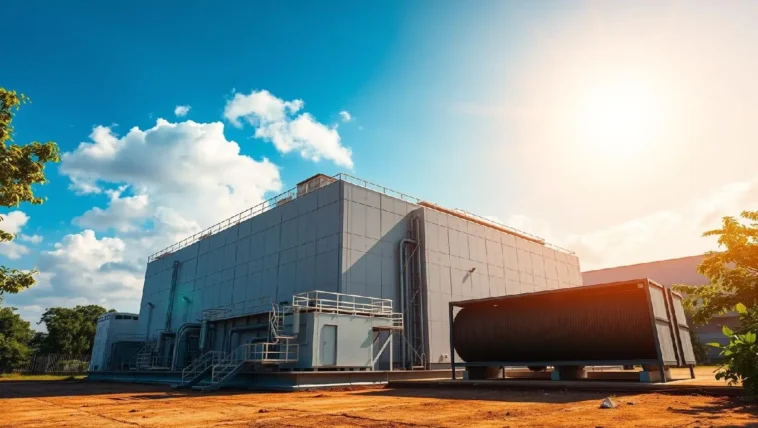
Taraba’s Green Power Revolution: 15MW Waste-to-Energy Plant
Taraba Waste-to-Power Plant promises a brighter, cleaner future for the state, harnessing waste to generate clean energy and stimulate economic growth.
Taraba’s Trash-to-Treasure Gambit: Can a New Power Plant Spark a Green Revolution?
In a bold move signaling a potential paradigm shift in Nigeria’s approach to waste management and energy production, Taraba State has inked a 25-year agreement with SectorLead Limited. The ambitious project? A 15MW waste-to-power plant designed to convert the state’s mounting municipal solid waste into a source of clean, renewable energy. But can this initiative truly live up to its promise and catapult Taraba into the vanguard of Nigeria’s green revolution?
From Eyesore to Energy Source: Tackling Taraba’s Waste Woes Head-On
For too long, Taraba, like many states in Nigeria, has grappled with the unsightly and environmentally hazardous problem of overflowing landfills. These mountains of discarded refuse not only blight the landscape but also pose significant health risks to local communities. The new waste-to-power plant offers a tantalizing solution: transforming this liability into an asset.
Imagine a Taraba where waste is no longer a problem but a resource. A place where the air is cleaner, the environment healthier, and the energy supply more secure. This is the vision that Governor Agbu Kefas and his administration are hoping to realize with this groundbreaking project.
The state’s commitment to addressing its waste management challenges through innovative means is commendable. However, the success of this venture hinges on several factors, including efficient waste collection systems, community engagement, and the plant’s operational efficiency.
A Quarter-Century Commitment: Decoding the SectorLead-Taraba Partnership
The 25-year agreement between Taraba State and SectorLead Limited represents a significant long-term investment in sustainable energy. But what exactly does this partnership entail? SectorLead, a company specializing in renewable energy solutions, will be responsible for the design, construction, and operation of the 15MW waste-to-power plant.
The agreement, witnessed by key state officials, underscores the government’s commitment to the project. The presence of the Programme Director of Strategy and Portfolio Delivery Office, the Commissioner for Environment and Climate Change, and the Commissioner for Waste Management and Resource highlights the cross-departmental collaboration required for the project’s success.
For SectorLead, this project represents a major opportunity to showcase its expertise in waste-to-energy technology and establish itself as a key player in Nigeria’s burgeoning renewable energy sector. The company’s CEO, Adedayo Mustapha, has described the project as a “turning point” for Taraba State, emphasizing its potential to deliver significant environmental, economic, and energy benefits.
However, the success of this partnership will depend on transparency, accountability, and a shared commitment to achieving the project’s goals. Regular monitoring and evaluation will be crucial to ensure that the plant operates efficiently and delivers the promised benefits to the people of Taraba.
The Alchemy of Energy: Unpacking the Waste-to-Power Process
How exactly does a waste-to-power plant transform garbage into electricity? The process involves a series of sophisticated technologies that convert municipal solid waste into usable energy. While the specific technology used in the Taraba plant has not been detailed, waste-to-energy plants typically employ one of several methods, including incineration, gasification, and anaerobic digestion.
Incineration involves burning waste at high temperatures to produce steam, which then drives turbines to generate electricity. Gasification converts waste into a synthetic gas (syngas) that can be used to fuel gas engines or turbines. Anaerobic digestion uses microorganisms to break down organic waste in the absence of oxygen, producing biogas that can be used for power generation.
The choice of technology will depend on factors such as the composition of the waste stream, environmental regulations, and economic considerations. Regardless of the method used, the waste-to-power process offers a significant advantage over traditional waste disposal methods by reducing the volume of waste sent to landfills and generating clean energy in the process.
However, it is crucial to ensure that the plant is equipped with state-of-the-art pollution control technologies to minimize emissions of harmful pollutants. Public concerns about air quality and potential health impacts must be addressed through transparent communication and rigorous environmental monitoring.
Illuminating Taraba: A Green Solution to the State’s Power Deficit
Taraba State, like many parts of Nigeria, suffers from a chronic energy deficit. Erratic power supply has hampered economic development, stifled business growth, and disrupted daily life for residents. The 15MW waste-to-power plant offers a glimmer of hope, promising to boost the state’s energy supply and enhance energy security.
While 15MW may seem like a relatively small amount of power, it can make a significant difference in a state where access to electricity is limited. The plant’s output can be used to power homes, businesses, and public facilities, reducing reliance on expensive and unreliable generators.
Moreover, the waste-to-power plant offers a more sustainable alternative to traditional fossil fuel-based power generation. By utilizing a renewable energy source – municipal solid waste – the plant can help reduce Taraba’s carbon footprint and contribute to the fight against climate change.
However, it is important to note that the waste-to-power plant is not a silver bullet solution to Taraba’s energy challenges. A comprehensive approach is needed, including investments in other renewable energy sources, improvements to the state’s electricity grid, and measures to promote energy efficiency.
Beyond Kilowatts: The Economic Spark Ignited by Waste-to-Energy
The benefits of the Taraba waste-to-power plant extend far beyond energy production. The project is expected to create jobs during both the construction and operational phases, stimulating economic growth and improving livelihoods. From construction workers and engineers to plant operators and waste management personnel, the plant will generate a range of employment opportunities for local residents.
Moreover, the plant can attract further investment in Taraba’s renewable energy sector, creating a virtuous cycle of economic growth and sustainable development. The project can also serve as a catalyst for the development of other waste-related industries, such as recycling and composting.
The economic benefits of the waste-to-power plant are particularly significant in a state like Taraba, where unemployment and poverty rates are high. By providing jobs and stimulating economic activity, the plant can help improve the quality of life for thousands of people.
Breathing Easier: The Environmental Payoff of Turning Trash into Power
One of the most compelling arguments for waste-to-energy plants is their potential to reduce carbon emissions and promote a cleaner environment. Traditional landfills are a major source of greenhouse gases, particularly methane, a potent climate pollutant. By diverting waste from landfills, the Taraba waste-to-power plant can significantly reduce these emissions.
Moreover, the plant can help reduce air and water pollution associated with traditional waste disposal methods. Landfills can contaminate groundwater and release harmful pollutants into the air, posing risks to human health and the environment. Waste-to-energy plants, when properly designed and operated, can minimize these risks.
The environmental benefits of the waste-to-power plant align with Nigeria’s national policies on climate change and sustainable development. The country has committed to reducing its greenhouse gas emissions and promoting the use of renewable energy sources. The Taraba project can serve as a model for other states looking to achieve these goals.
However, it is essential to conduct a thorough environmental impact assessment to identify and mitigate any potential risks associated with the plant’s operation. This assessment should include measures to minimize air and water pollution, protect biodiversity, and ensure the safe disposal of ash and other byproducts.
Ticking the Boxes: How Taraba’s Plant Aligns with Global Sustainability Goals
The Taraba waste-to-power plant is not just a local initiative; it is also a contribution to global efforts to achieve sustainable development. The project aligns with several of the United Nations Sustainable Development Goals (SDGs), particularly SDG 7 (Affordable and Clean Energy), SDG 12 (Responsible Consumption & Production), and SDG 13 (Climate Action).
By generating clean energy from waste, the plant helps to achieve SDG 7, which aims to ensure access to affordable, reliable, sustainable, and modern energy for all. By reducing waste sent to landfills and promoting responsible waste management practices, the plant contributes to SDG 12, which seeks to ensure sustainable consumption and production patterns.
By reducing greenhouse gas emissions and promoting the use of renewable energy, the plant supports SDG 13, which calls for urgent action to combat climate change and its impacts. The Taraba project demonstrates how local initiatives can contribute to global efforts to address some of the most pressing challenges facing humanity.
However, it is important to track the project’s progress and measure its impact on the SDGs. This can be achieved through regular monitoring and reporting, using indicators aligned with the SDG framework.
Nigeria’s Green Awakening: Is Waste-to-Energy the Next Big Thing?
The Taraba waste-to-power plant is part of a growing trend in Nigeria towards sustainable energy solutions. Several other states are also exploring the potential of waste-to-energy technology, recognizing its potential to address both waste management and energy challenges. A state-level assessment of waste-to-energy potential in Nigeria estimated that different states could generate between 31-205 MW of electricity, depending on their waste generation capacity.
However, despite this potential, the development of waste-to-energy projects in Nigeria has been slow. Challenges include poor waste collection efficiencies, lack of investment, and regulatory hurdles. A recent study estimated that Nigeria’s exploitable waste-to-energy capacity from municipal solid waste is below 3,800 GWh/year, with all states having less than 50 MW capacity.
The Taraba project can serve as a catalyst for the wider adoption of waste-to-energy technology in Nigeria. By demonstrating the viability and benefits of this approach, the project can encourage other states to invest in similar initiatives. The federal government can also play a role by providing incentives, streamlining regulations, and supporting research and development.
However, it is crucial to learn from past mistakes and avoid repeating the failures of previous renewable energy projects in Nigeria. This requires careful planning, transparent procurement processes, and effective project management.
Building on Success: Lessons from Kashimbila and Beyond
The Taraba waste-to-power plant is not the state’s first foray into renewable energy. The recent concession of the Kashimbila Dam to KP Hydro Limited marks another milestone in Taraba’s efforts to harness its natural resources for sustainable development. The Kashimbila Dam, a multipurpose project designed for irrigation, flood control, and power generation, has the potential to provide a significant boost to Taraba’s energy supply.
Governor Agbu Kefas has expressed optimism for investment in energy distribution and new hydro power projects, signing an MOU with China Civil Engineering Construction Corporation (CCECC) for energy projects. These initiatives demonstrate the state government’s commitment to diversifying its energy mix and promoting the use of renewable energy sources.
The success of the waste-to-power plant and the Kashimbila Dam project will depend on effective coordination and collaboration between government agencies, private sector partners, and local communities. It is also essential to address any potential social and environmental impacts associated with these projects.
A Vision for Tomorrow: Taraba’s Sustainable Energy Future
The Taraba waste-to-power plant represents more than just a project; it is a statement of intent. It signals Taraba’s commitment to building a sustainable future for its people, one where economic growth, environmental protection, and social well-being go hand in hand. The project has the potential to transform Taraba into a model for other states in Nigeria and across Africa.
But the journey towards a sustainable energy future is a long and challenging one. It requires sustained commitment, innovative thinking, and a willingness to embrace new technologies. It also requires the active participation of all stakeholders, including government, private sector, civil society, and local communities.
As Taraba embarks on this ambitious endeavor, it is important to remember that success is not guaranteed. There will be challenges and setbacks along the way. But by staying true to its vision and remaining committed to its goals, Taraba can overcome these obstacles and create a brighter, cleaner, and more prosperous future for all.
What’s your take on Taraba’s waste-to-power initiative? Share your thoughts and join the conversation below! Let’s discuss the potential of renewable energy in Nigeria and how we can all contribute to a more sustainable future.
As Taraba State takes bold steps towards a sustainable future, the innovative waste-to-power plant not only promises cleaner energy but also sparks a broader conversation about eco-friendly solutions. The commitment to renewable resources and responsible waste management reflects a growing global consciousness, with individuals and communities alike seeking ways to minimize their environmental footprint.
This wave of environmental awareness has fueled a surge in demand for products that support sustainable living. From home energy solutions to eco-friendly gadgets, consumers are increasingly eager to invest in technologies that reduce carbon emissions and promote a healthier planet. Are you ready to join the green revolution and discover how you can make a difference? Explore our curated selection of renewable energy systems and take the first step towards a more sustainable lifestyle. Don’t forget to share your thoughts on Taraba’s initiative in the comments below, and subscribe to our newsletter for the latest updates on green innovation!
Shop Products On Amazon
Renewable Energy Systems Design: Solar and Wind Engineering Handbook: A Comprehensive Guide to Designing Resilient and Sustainable Energy Systems
The world is changing — are you ready to design the energy systems that will power the future? 🌍⚡
Have you ever wondered how we can harness the infinite power of the sun and the wind to fuel our cities, industries, and homes sustainably? Do you dream of building renewable energy systems that not only work — but thrive efficiently, economically, and environmentally? Are you an engineer, student, or innovator looking to turn clean energy theory into real-world solutions?
Then this handbook is your ultimate blueprint.
Imagine standing before a solar array you designed — panels gleaming under the morning sun, silently generating power that changes lives. Picture the rhythmic dance of wind turbines, engineered by your hand, spinning hope into electricity. This isn’t a dream; it’s the reality you can create with the knowledge, precision, and confidence found within these pages.
Written with clarity, depth, and real-world expertise, Renewable Energy Systems Design: Solar and Wind Engineering Handbook bridges the gap between theory and practical application — making it the definitive companion for anyone passionate about renewable energy.
💡 Inside This Book, You’ll Discover:
Proven design principles for both solar photovoltaic and wind energy systems.
Step-by-step engineering processes — from feasibility studies to full-scale implementation.
Key calculations and diagrams simplified for students and professionals alike.
Real-world case studies that bring complex energy concepts to life.
Future-focused insights on hybrid energy systems, grid integration, and sustainability.
Design optimization techniques to maximize efficiency and reduce cost.
🎯 Goals of This Book:
Equip you with the technical mastery to design reliable renewable energy systems.
Help you understand and apply engineering principles in real projects.
Inspire you to lead in the global transition toward clean, sustainable power.
Build your confidence and credibility as a renewable energy designer or consultant.
🧠 What Makes This Book Different:
Unlike many technical manuals that drown readers in jargon or outdated data, this handbook delivers: ✅ Clarity instead of confusion — concepts are explained in plain, actionable terms. ✅ Confidence instead of hesitation — every topic builds your skill and certainty. ✅ Innovation instead of imitation — you’ll learn to design, not just copy.
Still wondering if it’s too technical or too advanced? Don’t worry — this book was designed for both beginners and seasoned engineers, with progressive learning paths and real-world illustrations to guide you at every level.
🎁 Perfect Gift For:
Engineering students and renewable energy learners 🎓
Professionals seeking to upskill in sustainable design ⚙️
Educators, researchers, and environmental enthusiasts 🌱
Anyone passionate about the clean energy revolution 💚
🌞 Your journey to mastering solar and wind energy design starts here. Don’t just watch the energy transition — become part of it.
👉 Get your copy today and start designing the systems that will power tomorrow.
The world is changing — are you ready to design the energy systems that will power the future? 🌍⚡
Have you ever wondered how we can harness the infinite power of the sun and the wind to fuel our cities, industries, and homes sustainably? Do you dream of building renewable energy systems that not only work — but thrive efficiently, economically, and environmentally? Are you an engineer, student, or innovator looking to turn clean energy theory into real-world solutions?
Then this handbook is your ultimate blueprint.
Imagine standing before a solar array you designed — panels gleaming under the morning sun, silently generating power that changes lives. Picture the rhythmic dance of wind turbines, engineered by your hand, spinning hope into electricity. This isn’t a dream; it’s the reality you can create with the knowledge, precision, and confidence found within these pages.
Written with clarity, depth, and real-world expertise, Renewable Energy Systems Design: Solar and Wind Engineering Handbook bridges the gap between theory and practical application — making it the definitive companion for anyone passionate about renewable energy.
💡 Inside This Book, You’ll Discover:
Proven design principles for both solar photovoltaic and wind energy systems.
Step-by-step engineering processes — from feasibility studies to full-scale implementation.
Key calculations and diagrams simplified for students and professionals alike.
Real-world case studies that bring complex energy concepts to life.
Future-focused insights on hybrid energy systems, grid integration, and sustainability.
Design optimization techniques to maximize efficiency and reduce cost.
🎯 Goals of This Book:
Equip you with the technical mastery to design reliable renewable energy systems.
Help you understand and apply engineering principles in real projects.
Inspire you to lead in the global transition toward clean, sustainable power.
Build your confidence and credibility as a renewable energy designer or consultant.
🧠 What Makes This Book Different:
Unlike many technical manuals that drown readers in jargon or outdated data, this handbook delivers: ✅ Clarity instead of confusion — concepts are explained in plain, actionable terms. ✅ Confidence instead of hesitation — every topic builds your skill and certainty. ✅ Innovation instead of imitation — you’ll learn to design, not just copy.
Still wondering if it’s too technical or too advanced? Don’t worry — this book was designed for both beginners and seasoned engineers, with progressive learning paths and real-world illustrations to guide you at every level.
🎁 Perfect Gift For:
Engineering students and renewable energy learners 🎓
Professionals seeking to upskill in sustainable design ⚙️
Educators, researchers, and environmental enthusiasts 🌱
Anyone passionate about the clean energy revolution 💚
🌞 Your journey to mastering solar and wind energy design starts here. Don’t just watch the energy transition — become part of it.
👉 Get your copy today and start designing the systems that will power tomorrow.
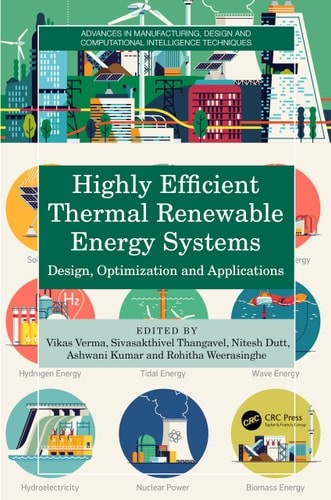
To secure a brighter future, advancing renewable energy systems is crucial. This book explores some of the latest developments in renewable energy technologies, objectively evaluating their costs and policies while addressing the outstanding challenges and proposing solutions. The book also discusses essential energy differences between urban and rural settings. With case studies and regional perspectives, it outlines a path forward for clean energy, providing essential reading for postgraduate students, researchers, and policymakers in the field.
Key features:
Covers the state-of-the-art of renewable energy systems
Discusses the costs and policies of various renewable energy systems and disseminates the outstanding challenges and possible solutions to overcome them
Discusses the latest advances in selected renewable energy technologies, in urban versus rural settings
Includes case studies and highlights a path forward for clean energy based on sound analyses
Provides essential reading for postgraduate students, researchers and policy makers working with renewable energy systems and technologies
This book delves into the latest advancements in renewable energy solutions, assessing costs and policies and tackling challenges with proposed solutions. It covers energy storage, the economics of investments, and includes case studies and regional perspectives, offering a path forward for clean energy. Suitable for students, researchers, and policymakers.
This book delves into the latest advancements in renewable energy solutions, assessing costs and policies and tackling challenges with proposed solutions. It covers energy storage, the economics of investments, and includes case studies and regional perspectives, offering a path forward for clean energy. Suitable for students, researchers, and policymakers.
An up to date account of renewable sources of electricity generation and their integration into power systems
With the growth in installed capacity of renewable energy (RE) generation, many countries such as the UK are relying on higher levels of RE generation to meet targets for reduced greenhouse gas emissions. In the face of this, the integration issue is now of increasing concern, in particular to system operators.
This updated text describes the individual renewable technologies and their power generation characteristics alongside an expanded introduction to power systems and the challenges posed by high levels of penetrations from such technologies, together with an account of technologies and changes to system operation that can ease RE integration.
Features of this edition:
Covers power conditioning, the characteristics of RE generators, with emphasis on their time varying nature, and the use of power electronics in interfacing RE sources to grids
Outlines up to date RE integration issues such as power flow in networks supplied from a combination of conventional and renewable energy sources
Updated coverage of the economics of power generation and the role of markets in delivering investment in sustainable solutions
Considers the challenge of maintaining power balance in a system with increasing RE input, including recent moves toward power system frequency support from RE sources
Offers an insightful perspective on the shape of future power systems including offshore networks and demand side management
Includes worked examples that enhance this edition’s suitability as a textbook for introductory courses in RE systems technology
Firmly established as an essential reference, the Second Edition of Renewable Energy in Power Systems will prove a real asset to engineers and others involved in both the traditional power and fast growing renewables sector. This text should also be of particular benefit to students of electrical power engineering and will additionally appeal to non-specialists through the inclusion of background material covering the basics of electricity generation.
An up to date account of renewable sources of electricity generation and their integration into power systems
With the growth in installed capacity of renewable energy (RE) generation, many countries such as the UK are relying on higher levels of RE generation to meet targets for reduced greenhouse gas emissions. In the face of this, the integration issue is now of increasing concern, in particular to system operators.
This updated text describes the individual renewable technologies and their power generation characteristics alongside an expanded introduction to power systems and the challenges posed by high levels of penetrations from such technologies, together with an account of technologies and changes to system operation that can ease RE integration.
Features of this edition:
Covers power conditioning, the characteristics of RE generators, with emphasis on their time varying nature, and the use of power electronics in interfacing RE sources to grids
Outlines up to date RE integration issues such as power flow in networks supplied from a combination of conventional and renewable energy sources
Updated coverage of the economics of power generation and the role of markets in delivering investment in sustainable solutions
Considers the challenge of maintaining power balance in a system with increasing RE input, including recent moves toward power system frequency support from RE sources
Offers an insightful perspective on the shape of future power systems including offshore networks and demand side management
Includes worked examples that enhance this edition’s suitability as a textbook for introductory courses in RE systems technology
Firmly established as an essential reference, the Second Edition of Renewable Energy in Power Systems will prove a real asset to engineers and others involved in both the traditional power and fast growing renewables sector. This text should also be of particular benefit to students of electrical power engineering and will additionally appeal to non-specialists through the inclusion of background material covering the basics of electricity generation.
Join the energy revolution―this comprehensive resource offers quantitative and practical approaches for designing a sustainable, 21st-century electricity system, covering renewable generation technologies, conventional power plants, energy efficiency, storage, and microgrids.
Renewable and Efficient Electric Power Systems dives into the fundamentals of modern electricity systems, introducing key technologies, economic and environmental impacts, and practical considerations for energy and climate professionals. The book explains the science and engineering underlying renewable energy―including solar, wind, and hydropower―along with an expanded set of key energy technologies such as fuel cells, batteries, and hydrogen. This updated edition prepares readers to participate in the world’s ongoing efforts to decarbonize the electricity sector and move toward a more sustainable future.
The book covers foundational knowledge of electric power, up through current developments and future prospects for renewable energy. The update significantly expands core content to address topics such as energy efficiency, smart grids, energy storage, and microgrids. It reframes energy as an integral factor in urban development and highlights forward-looking strategies to decarbonize the built environment. The text draws on a multi-scalar approach that ranges from utility-scale to building-scale to assess energy systems, and further considers centralized vs. distributed system architecture. The authors integrate perspectives from engineering professionals across different sectors, incorporating relevant insights from applied projects, with an eye toward implementing energy systems in the real world. Given the textbook’s broad reach, this edition situates energy development in an international context and provides examples relevant to a global audience.
An essential resource for engineers and other practitioners working in climate and energy, offering cutting-edge frameworks and quantitative approaches to energy system design.
Early chapters develop the skills and knowledge necessary for students and professionals entering the clean energy field. Later chapters offer an excellent bridge to prepare advanced students for further study in power engineering, or who intend to pursue policy or economic analysis.
Step-by-step explanations of quantitative analysis are supplemented with additional practice problems to encourage self-instruction or complement classroom use.
Accessible explanations provide planners and policymakers with fundamental technical understanding of energy systems.
Combines pure technical analysis with economic and environmental considerations, and explores the link between energy, carbon, and new digital technologies, to provide a more comprehensive approach to energy education.
As the world undergoes a transformation in energy and electricity, Renewable and Efficient Electric Power Systems is an indispensable text for students of energy, environment, and climate, as well as for practitioners seeking to refresh their understanding of renewable energy systems.
Join the energy revolution—this comprehensive resource offers quantitative and practical approaches for designing a sustainable, 21st-century electricity system, covering renewable generation technologies, conventional power plants, energy efficiency, storage, and microgrids.
Renewable and Efficient Electric Power Systems dives into the fundamentals of modern electricity systems, introducing key technologies, economic and environmental impacts, and practical considerations for energy and climate professionals. The book explains the science and engineering underlying renewable energy—including solar, wind, and hydropower—along with an expanded set of key energy technologies such as fuel cells, batteries, and hydrogen. This updated edition prepares readers to participate in the world’s ongoing efforts to decarbonize the electricity sector and move toward a more sustainable future.
The book covers foundational knowledge of electric power, up through current developments and future prospects for renewable energy. The update significantly expands core content to address topics such as energy efficiency, smart grids, energy storage, and microgrids. It reframes energy as an integral factor in urban development and highlights forward-looking strategies to decarbonize the built environment. The text draws on a multi-scalar approach that ranges from utility-scale to building-scale to assess energy systems, and further considers centralized vs. distributed system architecture. The authors integrate perspectives from engineering professionals across different sectors, incorporating relevant insights from applied projects, with an eye toward implementing energy systems in the real world. Given the textbook’s broad reach, this edition situates energy development in an international context and provides examples relevant to a global audience.
An essential resource for engineers and other practitioners working in climate and energy, offering cutting-edge frameworks and quantitative approaches to energy system design.
Early chapters develop the skills and knowledge necessary for students and professionals entering the clean energy field. Later chapters offer an excellent bridge to prepare advanced students for further study in power engineering, or who intend to pursue policy or economic analysis.
Step-by-step explanations of quantitative analysis are supplemented with additional practice problems to encourage self-instruction or complement classroom use.
Accessible explanations provide planners and policymakers with fundamental technical understanding of energy systems.
Combines pure technical analysis with economic and environmental considerations, and explores the link between energy, carbon, and new digital technologies, to provide a more comprehensive approach to energy education.
As the world undergoes a transformation in energy and electricity, Renewable and Efficient Electric Power Systems is an indispensable text for students of energy, environment, and climate, as well as for practitioners seeking to refresh their understanding of renewable energy systems.
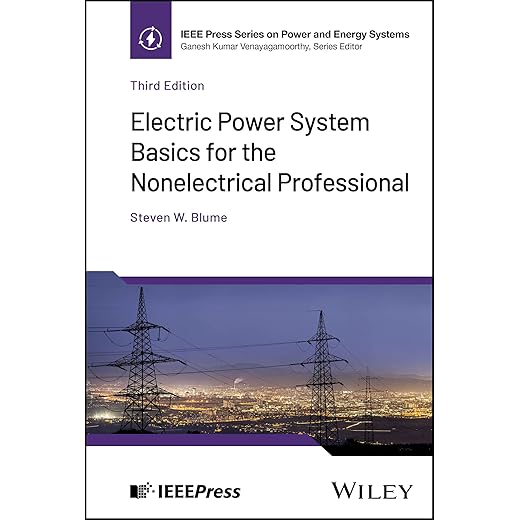
Understand the fundamentals of electrical power systems with this accessible guide
Few subjects are more fundamental to modern life than electrical power. The systems that generate, transport, and distribute electricity are among the most essential contributors to modern industry, development, and everyday living. As energy demand grows and, with it, the electric power industry, more and more non-electrical professionals must make important policy and administrative decisions regarding the systems that power our world.
Electric Power System Basics for the Nonelectrical Professional provides an education on the basics of this subject, including the various types of energy sources, types of transmission and distribution lines, grid modernization, and much more. From residential to industrial energy, and from metering principles to energy conservation techniques, this book provides a one-stop reference on all relevant areas of knowledge. Now fully updated to reflect the latest advances and the current state of a growing industry, it is a must-own for anyone looking to bring foundational power systems knowledge to bear on policy or industrial issues.
Readers of the third edition will also find:
Coverage of wildfire mitigation strategies to reduce safety risk
Detailed discussion of regulatory changes and their effects on system operations
Updated coverage of system reliability and smart technologies
Updated discussion of the transitioning digital power grid
Electric Power System Basics for the Nonelectrical Professional is ideal for power industry executives and state regulators.
Taraba’s Green Power Revolution: 15MW Waste-to-Energy Plant
💬 What’s your take? Drop a comment below! ⬇️
#BreakingNews #LatestUpdate #StayInformed
📖 Read More: https://tinyurl.com/26txvplf

 BurrowBoss



![Renewable energy systems [hardcover] buchla, david; kissell, thomas and floyd,](https://i.ebayimg.com/images/g/y-UAAeSw~1BpeabW/s-l960.jpg "S L960")





Taraba’s Green Power Revolution: 15MW Waste-to-Energy Plant
💬 What’s your take? Drop a comment below! ⬇️
#BreakingNews #LatestUpdate #StayInformed
📖 Read More: https://tinyurl.com/26txvplf